


Industrial burners are essential components in various industries, particularly in heating processes and energy production. Industrial burners are fundamental to combustion systems, efficiently converting different types of fuels into heat and energy. Selecting the right burner and understanding its operation is vital for enhancing energy efficiency and lowering operational costs. Additionally, this knowledge is important for ensuring safety and minimizing environmental pollutants.
In this article, we will delve into the various types of burners, burner systems, their operations, and components to enhance your understanding. Additionally, we will introduce a reputable burner manufacturing factory known for providing high-quality burners, helping you choose the best option to meet your specific needs.

What is an Industrial Burner?
A burner is one of the key components in heating and energy generation systems, designed to convert various fuels into heat and thermal energy. Industrial burners, designed for specific industrial applications, come in various types suited to diverse sectors. They are widely used in refineries, chemical industries, power generation plants, and central heating systems. Ensuring the proper and efficient performance of industrial burners significantly enhances energy efficiency and reduces operational expenses.
Depending on industrial burner system design, capacity, and performance, the burners are used in a variety of industries and equipment, including industrial boilers.

Types of Industrial Burners and their Features
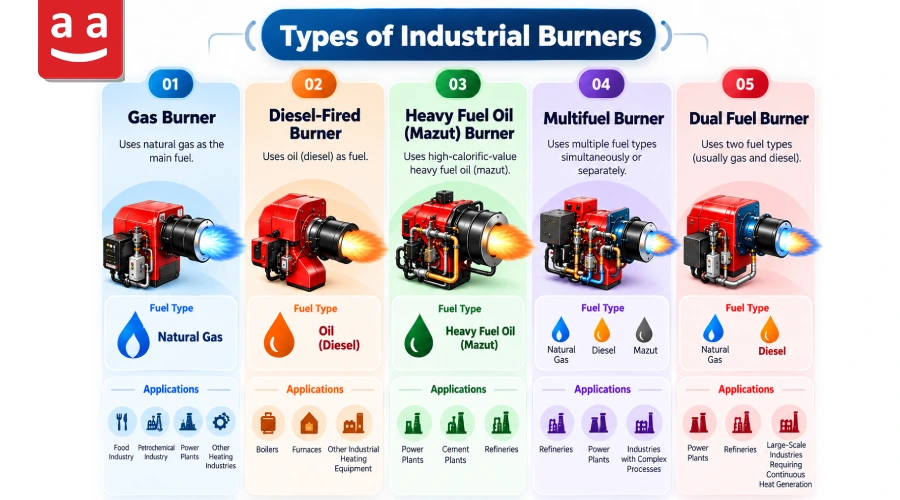
There are different types of burners. Industrial burners can be classified into several categories based on the type of fuel they use and their specific capabilities. The table below provides an overview of the different types of industrial burners, along with their key differences and applications. The following sections provide a more detailed technical overview of types of industrial burners.
| Burner Type | Fuel Type | Key Features | Advantages | Disadvantages | Applications |
| Gas Burner | Natural gas | Complete combustion, high controllability, and low emissions | High efficiency, cost-effective, and environmentally friendly | Requires access to a natural gas supply | Food processing, petrochemical industries, and power plants
|
| Diesel-Fired Burner
(oil-fired burner) |
Diesel | Liquid-fuel combustion, requiring a pump and nozzle | Suitable for areas without access to a natural gas supply, easy to store | Higher emissions compared with gas-fired burners | Boilers, furnaces, and industrial heating systems |
| Heavy Fuel Oil Burner | Heavy fuel oil | Requires a preheater; suitable for heavy fuels | High energy output, low fuel costs | High emissions and requires specialized equipment | Refineries, cement plants, and power plants
|
| Dual-Fuel Burner | Gas and diesel | Automatic fuel switching capability | High flexibility, preventing production downtime | More complex system, higher cost | Large-scale industries and power plants |
| Multi-Fuel Burner | Multiple fuels | Ability to use multiple fuels simultaneously or separately | High flexibility in adapting to changing fuel conditions | Difficult maintenance and high complexity
|
Refineries and heavy industries |
Industrial burners are used in a wide range of applications depending on the fuel type, thermal capacity, burner design, and process requirements. One of their most important applications is providing the heat required for industrial furnaces, where selecting the right furnace burner plays a key role in maintaining flame stability, ensuring uniform heat transfer, and achieving optimal process performance.
1- Gas Burner
In this type of burner, natural gas is used as primary fuel. Natural gas is one of the most popular fuels for industrial burners due to its affordability, cleanliness, and availability. These burners are highly efficient because of their complete combustion and precise control. Additionally, gas burners offer lower emission levels compared to other types of burners, making them an ideal choice for industries that prioritize environmental protection. These burners are commonly used in industries such as food processing, petrochemicals, power plants, and other sectors that demand high heat output.
For a detailed review and introduction of these burners, you can refer to the article on industrial gas burner.
2- Oil Burner
These burners use liquid fuel (oil), making them a popular choice in regions with limited access to natural gas or where oil offers a more cost-effective solution. Oil burners are commonly used to generate heat in boilers, furnaces, and other industrial heating equipment. Given the characteristics of the oil fuel, these burners require advanced equipment to optimize combustion and reduce emissions. Although oil burners typically produce more pollutants than their gas-fired counterparts, proper adjustments can significantly lower pollution levels.
For more information about this type of burners, you can look at oil burner introduction article.

3- Heavy Oil Burner
Heavy oil burners use mazut that is recognized for high calorific value. Due to the lower cost and high energy content of mazut, these burners are commonly used in refineries, cement plants, and power generation facilities. Heavy fuel oil burners necessitate pre-heating equipment due to the high viscosity of mazut. This fuel has high viscosity and must be warmed before combustion to ensure smooth flow through the fuel pipes and nozzles. As a result of using this type of fuel, these burners create significantly higher pollution levels compared to gas-fired burners.
4- Multi-fuel Burner
These burners are designed to use various types of fuels, either simultaneously or independently. This feature makes them highly adaptable for industries that require flexibility in fuel types, especially when the price or availability of a specific fuel fluctuates. The multi-fuel burners are equipped with advanced control systems that efficiently manage the consumption and combustion of multiple fuels at once. These burners are widely used in industries with complex processes that prioritize energy optimization, such as refineries and power plants.
5-Dual-fuel burner
These are the most common types of multi-fuel burners. Dual-fuel burners can use two types of fuel, typically natural gas and oil. In situations where natural gas is unavailable, the dual-fuel (gas-oil) burner automatically shifts to the oil fuel. This capability not only improves energy efficiency but also minimizes interruptions in production processes.
Modulating burners
These are another type of industrial burner designed to provide continuous and precise control of the flame. They can continuously adjust their firing rate between the minimum and maximum capacity to match the actual heat demand of the system. This allows the burner output to be precisely matched to the system’s actual heat demand, providing more accurate control over the combustion process.
Components of Industrial Burner
An industrial burner is composed of multiple critical parts, each contributing significantly to its proper and efficient performance. The following sections provide a detailed description of the industrial burner systems including components and industrial burner design.

1- Industrial Burner Fuel Train
The fuel line is responsible for supplying fuel and creating the appropriate pressure and flow rate before it reaches the burner. The gas fuel train includes equipment such as filters, regulators, safety valves, main valves, pressure switches, butterfly valves, gas pressure sensors, and more. The liquid fuel train includes pump, solenoid valve, fuel regulator, and more.
2- Burner Combustion Head
The combustion system is responsible for delivering fuel to the combustion chamber and mixing it with air. Depending on the type of fuel (gas, liquid, or solid), this system includes various components:
Gas Nozzles: In gas-fired burners, the nozzles and gas pipes inject the fuel in the appropriate direction and position.
Liquid Fuel Nozzles: In liquid fuel burners, such as those using oil or mazut, the nozzles are used to spray the fuel in fine droplets. This spraying ensures that the fuel mixes well with the air, leading to more complete combustion.
3- Burner Ventilation System
The air supply system is a critical component of industrial burners, responsible for delivering the required air or oxygen for efficient combustion. Below are the key components of the air supply system:
Fans: Powerful fans are essential for blowing air into the burner, ensuring proper mixing with fuel to facilitate the combustion process. These fans are in various sizes and capacities, tailored to the specific type of burner and the required airflow for optimized operation.
Dampers: Regulating airflow is done by dampers. They can be controlled either manually or automatically, allowing for precise adjustments. By adjusting the dampers, the air/fuel ratio can be controlled which leads to maximizing efficiency and reducing emissions.
Air Duct: Industrial burners are classified into two types based on their configurations: monoblock and dual block. In monoblock burners, the fan is directly connected to the burner, providing a compact design. In contrast, dual block burners feature a separate fan that connects to the burner via an air duct. In this design, the outlet air is directed to the burner through the duct.
4- Ignition System
This system is responsible for starting the combustion process. The components of ignition system are as follows:
Pilot: To initiate the combustion process in large burners, small burners known as pilot burners are used. The pilot burner is activated first for running the burner, generating a small flame. After the pilot is established, the main fuel is injected, leading to the creation of the main flame. The pilot flame is crucial to have a safe combustion start. Once the main flame stabilizes, the pilot burner is turned off.

Ignition Electrodes: These electrodes create an ignition that leads to combustion of the air and fuel mixture in the pilot. The pilot is not used in small burners instead the ignition electrodes directly generate the main flame.
5- Electrical Panel of Industrial Burner
It includes the power circuit and control system. The other parts in this panel are as follows: motor starters, contactors, terminals, wiring and protective components of the electronic system of the burner such as fuses.
6- Industrial Burner Control System
Control system acts as the brain of the burner, overseeing and adjusting all operations. To gain a more thorough understanding of its components and working principles, we suggest reviewing the article “Burner Control Systems”. This system comprises:
- Controllers: The analog or digital controllers are responsible for monitoring temperature, pressure, air/fuel ratio, and other operational parameters. Based on the conditions, they send necessary commands to different parts of the burner and actuators.
- Sensors: Sensors of temperature, pressure, and exhaust gas analyzers that send precise data about the burner’s conditions to the controllers.
- Actuators and Automatic Valves: Linear actuators, servomotors, and solenoid valves that control the flow of fuel and air based on commands received from the controller.
7- Safety System of Industrial Burner
Safety systems in industrial burners play an important role in preventing accidents. These systems include the following:
- Safety Valves: Valves that shut off the fuel flow in case of excessive increase or decrease in pressure.
- Flame Detection System: This system continuously monitors the flame, and if the flame goes out due to technical failure or disruption in fuel flow, it cuts off the fuel supply to prevent potential hazards.
- Pressure Switches: These switches are responsible for monitoring the air and fuel pressure in the burner. If the pressure decreases or increases excessively, they will cause the burner to stop functioning.
- Emergency Shutdown Systems: These systems automatically turn off the burner in hazardous situations and prevent its operation.
- Alarms and Warnings: Systems that notify the operator in case of any malfunction or abnormal change in the burner’s operation.
Operation of Industrial Burners
Industrial burners, used in heating systems and energy production, are responsible for converting the chemical energy of fuel into heat. The operation of these burners involves several important steps, explained as follows:

1- Burner Air Supply
The first step in the operation of a burner is creating sufficient airflow. For a complete combustion of the fuel, oxygen is needed, which is supplied to the burner through an air supply system. In industrial burners, the air supply system includes fans and electromotor that blow combustion air into the burner. The correct air/fuel ratio is crucial for optimal combustion. Therefore, precise control systems are used in burners to adjust this ratio.
2- Fuel Injection into Combustion Chamber
After establishing the necessary airflow, fuel is injected into the combustion chamber. The fuel, can be natural gas, oil, heavy oil, or a combination of various fuels, is transferred into the burner through an injection system. In gas burners, fuel enters the combustion chamber as gaseous form, while in liquid burners like oil or heavy oil, it is sprayed in as liquid through pumps and nozzles.
3- Fuel and Air Mixing for More optimal combustion
In the combustion chamber, fuel and air are completely mixed. This process is precisely done to ensure optimal combustion. In gas burners, the gas is combined with the air. In liquid burners, the fuel is atomized (sprayed) through nozzles and mixed with the inlet air.
4- Combustion Process
After mixing the fuel and air, the mixture is ready for combustion. During this step, the ignition system (pilot or ignition electrodes) is activated to create a flame and initiate the combustion process. The flame is formed in the combustion chamber which leads to producing thermal energy.
5- burner Control and Regulation
To ensure optimal and safe operation, industrial burners are equipped with advanced control systems. These systems continuously monitor temperature, pressure, air/fuel ratio, and other important parameters. They can be adapted to changes in operational conditions to ensure that the system operates with minimal emissions and maximum efficiency, preventing incomplete combustion or excessive pollutant emissions.
6- Flue Gas Removal
After combustion, the flue gases (such as carbon dioxide and water vapor) get outside the system through chimneys and exhaust systems.
Guide to Selecting and Purchasing an Industrial Burner
When selecting and purchasing an industrial burner, the burner’s technical specifications should be carefully evaluated based on the type of equipment, process conditions, and specific project requirements. The following factors should be considered when selecting and purchasing an industrial burner:
- Fuel type: Natural gas, diesel, heavy fuel oil (mazut), or dual/multi-fuel
- Required thermal capacity and burner output
- Type of end-use equipment, such as a boiler, furnace, heater, or dryer
- Combustion system and energy efficiency
- Burner turndown ratio and capacity control
- Type of control system
- Dimensions and specifications of the combustion chamber
- Required flame length and flame shape
- Combustion chamber pressure and operating conditions of the equipment
- Environmental conditions at the installation site, including temperature, humidity, and elevation above sea level
- Emission requirements and applicable project standards
- Quality of the components, equipment, and safety devices used in the burner
- Installation, commissioning, combustion tuning, and technical support services
As a specialized manufacturer of industrial burners, Raadman has the engineering and manufacturing capabilities to provide burners tailored to the technical requirements and operating conditions of each project. Raadman’s technical experts evaluate key factors such as the required capacity, fuel type, boiler or furnace specifications, installation conditions, and process requirements to recommend the most suitable burner for each application.
To purchase an industrial burner, you can submit your project information and technical specifications by completing the form below. After reviewing your request, our technical experts will contact you to complete the burner selection process based on your project requirements and budget. For projects with specific or demanding operating conditions, Raadman can also design and manufacture customized industrial burners to meet the required specifications.
Raadman Technologies in the field of industrial burners
Leveraging cutting-edge global technologies, Raadman Industrial Group has successfully designed and produced two state-of-the-art industrial burners focused on performance optimization and environmental emission reduction. These innovative products are patented in Iran under the “Raadman” brand.
In addition to the above, Raadman’s focus on smart automation and performance optimization has led to the launch of advanced burners, including modulating burner systems. Featuring an electronic modulating system, these burners are considered among the most sophisticated burner control technologies on the market. Designed for continuous and precise capacity modulation, these systems offer a wide range of performance advantages.

Key Features of Raadman Modulating Burners
Continuous control of Capacity: Instead of the traditional on/off operation, these burners dynamically adjust combustion capacity to meet process needs. This results in reducing the fuel consumption and improving the efficiency.
Reduced Equipment Wear and Tear: Precise regulation of combustion parameters decreases strain on related equipment, extending the system’s lifespan and reducing maintenance costs.
High Safety: The electronic modulating system is equipped with advanced sensors that continuously monitor burner operation. It provides immediate alerts in case of faults or inconsistencies, ensuring operational safety.
Compatibility with Energy Management Systems: These burners can be connected to intelligent energy monitoring and management systems, enabling remote control and optimization.
Emission Reduction: By optimizing the combustion process, harmful gas emissions are minimized, complying with environmental standards.
Flexibility in Design and Application: Raadman’s modulating burners can be customized for various industrial applications, including power plants, oil and gas industry, and heavy industry.
Continuous Monitoring on Operation: These burners are equipped with digital monitoring systems that provide real-time operation data, allowing users to make quick and efficient decisions.
Raadman’s modulating burners, combining advanced technology with engineering design, not only boost industrial efficiency but also contribute significantly to operational cost savings and environmental sustainability by improving safety and reducing emissions.

Choosing the Right Fuel for an Industrial Burner
Fuel selection for an industrial burner should take into account the level of emissions produced, including carbon monoxide (CO), sulfur dioxide (SO₂), nitrogen oxides (NOₓ), and particulate matter (PM). Environmental regulations may restrict the use of certain fuels or require the installation of emission-control and treatment systems.
- Application and combustion equipment: The choice of fuel depends on the type of combustion equipment, such as a furnace, boiler, turbine, or engine. Combustion equipment is generally designed to operate with specific fuels, and switching to a different fuel may require significant modifications or replacement of certain components.
- Safety and storage requirements: Safe storage conditions, fire and explosion risks, leak detection and control requirements, and the need for fuel preheating are important factors in fuel selection. Heavy liquid fuels and solid fuels often require specialized storage and handling systems, while certain gaseous fuels require dedicated piping infrastructure and pressurized storage facilities.
For more information on selecting the right burner for steam boilers, see our article on Boiler Burner Selection.
Industrial Burners and a Sustainable Future
Industrial burners consist of complex components and systems designed to produce heat and energy with maximum efficiency and minimal emissions. Familiarity with the various types of burners, including gas, oil, dual-fuel, heavy oil, and multi-fuel burners, allows you to make the best choice for your specific industrial needs. Each type of burner has unique features and advantages that can be used in various applications.
Additionally, selecting and using the right type of burner requires attention to factors such as fuel type, efficiency, safety, and emission levels. Reputable brands in this field, such as Raadman, can help you to choose the best industrial burners by providing high-quality products and appropriate technical support. By considering all these factors, you can improve the performance of your heating systems and reduce operational costs.
Frequently Asked Questions about Industrial Burners
1- What is the role of industrial burners in industrial applications?
Industrial burners convert fuel into thermal energy, serving applications in petrochemical plants, power stations, and central heating systems for reliable heat supply.
2- What are the critical components that make up an industrial burner?
Key components consist of the fuel train, combustion head (nozzles), ventilation system (fan and damper), ignition system (pilot and igniter), control system, and safety system.
3- What are the key safety components in an industrial burner system?
The most important safety components include the flame detection system (to shut off fuel flow in case of flame failure), safety shut-off valves, and pressure switches for monitoring air and fuel pressure.
4- What types of industrial burners are there?
Industrial burners, classified by fuel type, include gas burners (fuel-efficient and low-emission), oil burners (ideal for regions lacking natural gas supply), heavy oil burners (high-performance and cost-effective for heavy industry), and dual or multi-fuel burners (designed for use with various fuels to provide greater flexibility).
5- Which type of burner produces lower emissions?
Industrial gas burners and modulating burners emit the least pollutants because of their efficient combustion and accurate air-fuel ratio control. Conversely, heavy oil burners have the highest emission levels.


2 responses
How can I improve the energy efficiency of an industrial burner operation?
Improving the energy efficiency of an industrial burner involves a combination of technical adjustments, maintenance practices, and operational awareness. The most effective methods include maintaining an optimal air-to-fuel ratio through precise calibration of the control system, cleaning fuel nozzles, filters, and air passages to ensure complete combustion, and regularly checking the fan and damper settings.
Additionally, installing modulating or fully automatic burners can significantly improve fuel efficiency since they continuously adjust the flame capacity based on real-time process demands.
Operators should also monitor flue gas composition using oxygen or CO analyzers to verify combustion efficiency, insulate the combustion chamber and piping to reduce heat loss, and ensure proper training of maintenance personnel.
When applied together, these actions can reduce fuel consumption by 10–20% while lowering emissions and extending burner lifespan.