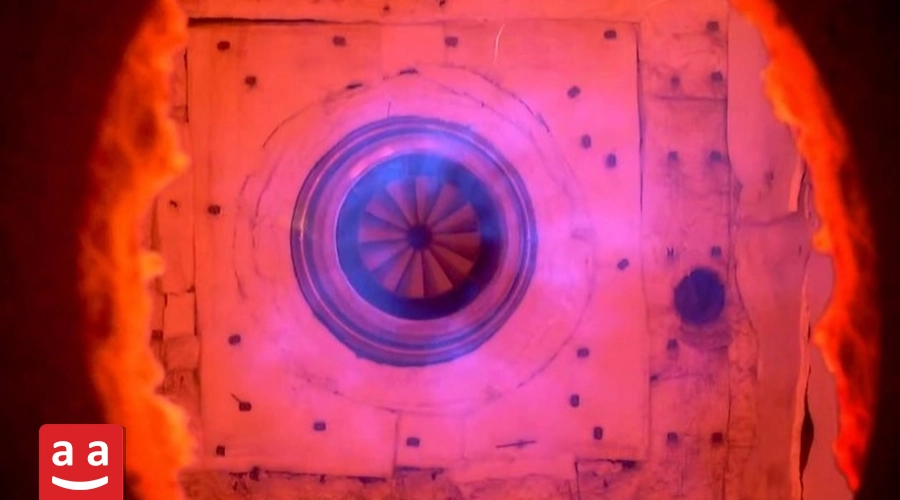

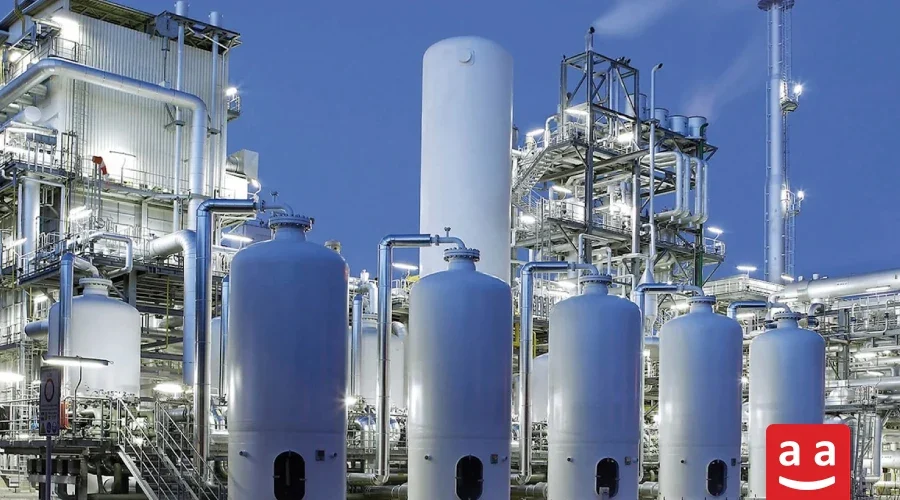
Reforming units play a crucial role in petrochemical and refinery industries, converting hydrocarbons into synthesis gas or valuable aromatic compounds. These processes are often endothermic and require a precise and uniform supply of thermal energy. Due to the crucial role of the burner in creating optimal thermal conditions, proper selection and design of the burner directly affect efficiency, equipment lifespan, and the quality of the final product.
This article presents the main types of reforming units (reformers), examining the specific combustion requirements of each and the key considerations in burner design. It also provides the foundation for introducing Raadman Industrial Group’s specialized approach to designing, developing, and localizing optimized burners for reforming unit applications.
The reforming process is a vital operation in the petrochemical industry, serving as a primary method for producing essential materials such as hydrogen, synthesis gas, and aromatic compounds. By means of high-temperature chemical reactions, hydrocarbons are transformed into more valuable products. Since many of these reactions are highly endothermic, they demand a continuous and precisely controlled supply of thermal energy. As a result, the accurate performance of burners plays a critical role, not only in maintaining reaction stability but also in enhancing the overall efficiency and safety of the unit.
Burners must be capable of producing stable, uniform flames with high thermal efficiency while minimizing pollutant emissions. Given the operational complexities of reformers or reforming units, burner design for these applications requires a deep understanding of the chemical process, furnace thermal behavior, and the specific requirements of each reforming units or reformer type. In the following sections, we introduce the common types of reformers and examine the combustion characteristics essential for each.
Types of Reforming units and Their Combustion Properties
Reforming units convert hydrocarbons into synthesis gases such as hydrogen. This process primarily takes place through reactions with steam or oxygen at high temperatures, aided by catalysts. The main types of reformers or reforming units include the following, which will be discussed in detail below.
Steam Methane Reformer (SMR)
Steam Methane Reforming is the most common technology for hydrogen production in petrochemical and refinery industries. In this process, natural gas (primarily methane) reacts with steam at high temperatures in the presence of a Nickel catalyst, producing Hydrogen, Carbon Monoxide, and Carbon Dioxide. The primary reaction is strongly endothermic, and the catalyst tubes operate within a temperature range of approximately 800 to 900 °C.
In this form of reformer (reforming unit), natural gas reacts with steam to form carbon monoxide and hydrogen, a reaction that requires 206 kJ/mol of energy input. Subsequently, carbon monoxide reacts with steam in the Water-Gas Shift reaction, producing carbon dioxide and additional hydrogen. This exothermic reaction releases about 41 kJ/mol of energy. Overall, through these two steps involving methane and steam, carbon dioxide and hydrogen are produced with a net energy requirement of 165 kJ/mol.
![\[ \mathrm{CH_4 + H_2O} \ \overset{\boxed{\ }}{\rightleftharpoons} \ \mathrm{CO + 3H_2} \quad \Delta H_{SR} = 206\ \mathrm{kJ/mol} \]](https://raadmanburner.com/wp-content/ql-cache/quicklatex.com-16ed6d40fb8fbc4f38813f85fb5e4379_l3.png "Rendered by QuickLaTeX.com")
![\[ \mathrm{CO + H_2O} \ \overset{\boxed{\ }}{\rightleftharpoons} \ \mathrm{CO_2 + H_2} \quad \Delta H_{WGSR} = -41\ \mathrm{kJ/mol} \]](https://raadmanburner.com/wp-content/ql-cache/quicklatex.com-4f23c9fd92b44dd8a50ffb83e232ea1e_l3.png "Rendered by QuickLaTeX.com")
![\[ \mathrm{CH_4 + 2H_2O} \ \overset{\boxed{\ }}{\rightleftharpoons} \ \mathrm{CO_2 + 4H_2} \quad \Delta H_{DSR} = 165\ \mathrm{kJ/mol} \]](https://raadmanburner.com/wp-content/ql-cache/quicklatex.com-eae6c52adc402db7d9c02203902302fa_l3.png "Rendered by QuickLaTeX.com")
To supply this energy, process tubes are placed inside a furnace where burners are installed around the tubes following a specific pattern. Burners used in SMR must produce stable flames with high radiant heat transfer and uniform heat distribution to prevent hot spots on the tube surfaces. Additionally, controlling the air-to-fuel ratio, managing pollutants (especially NOx), and ensuring burner compatibility with process load variations are key design requirements for burners in this type of reformer or reforming unit.
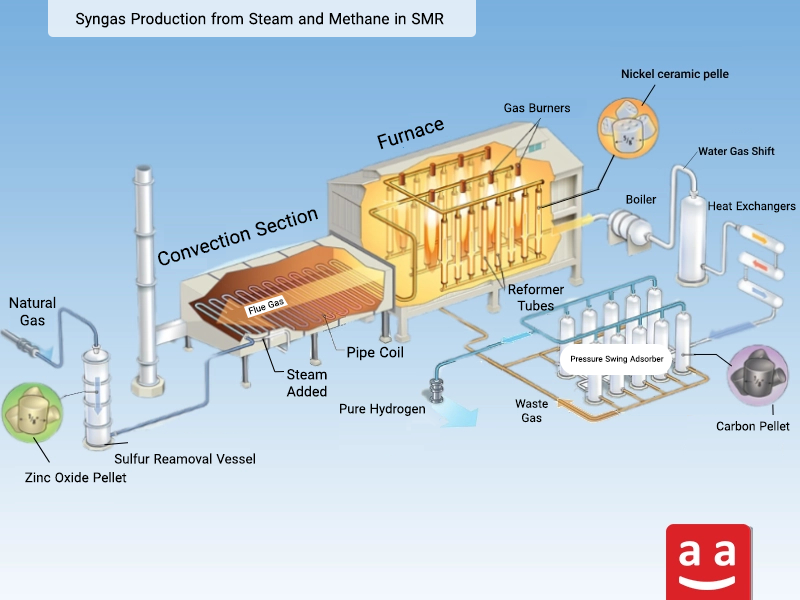
In the design and operation of steam methane reformers, selecting the appropriate burner type is critically important, as it greatly influences heat distribution, flame stability, process efficiency, and pollutant formation. Generally, the burners used in these units are classified into three main categories based on their installation location:
1- Side-Fired Burners
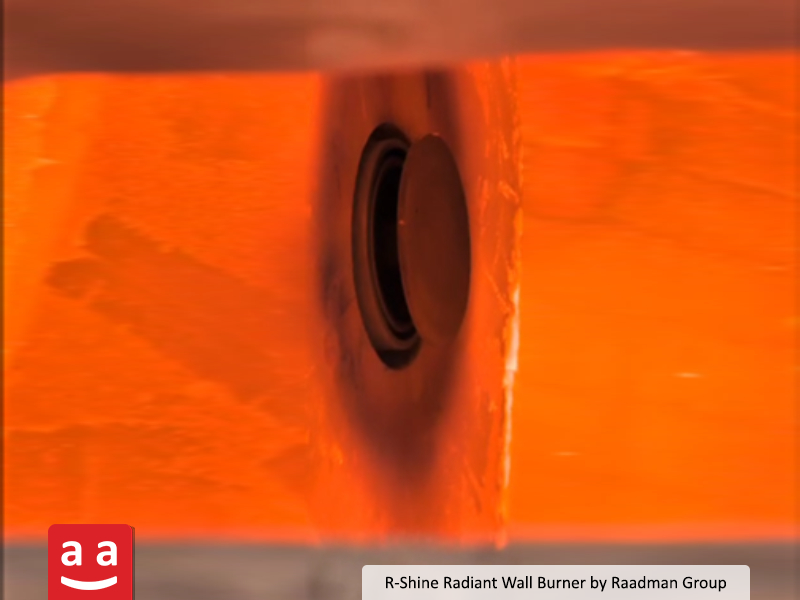
Side-fired burners are the most common type of burner in both traditional and modern reforming units. These burners are installed on the furnace sidewalls and directly transfer heat toward the catalyst-containing tubes. In more advanced designs, these burners can be radiant wall burners, which transfer energy through radiation from the burner’s hot surface without a free flame. This design leads to more uniform heat distribution, reduces hot spots, and lowers NOx emissions.
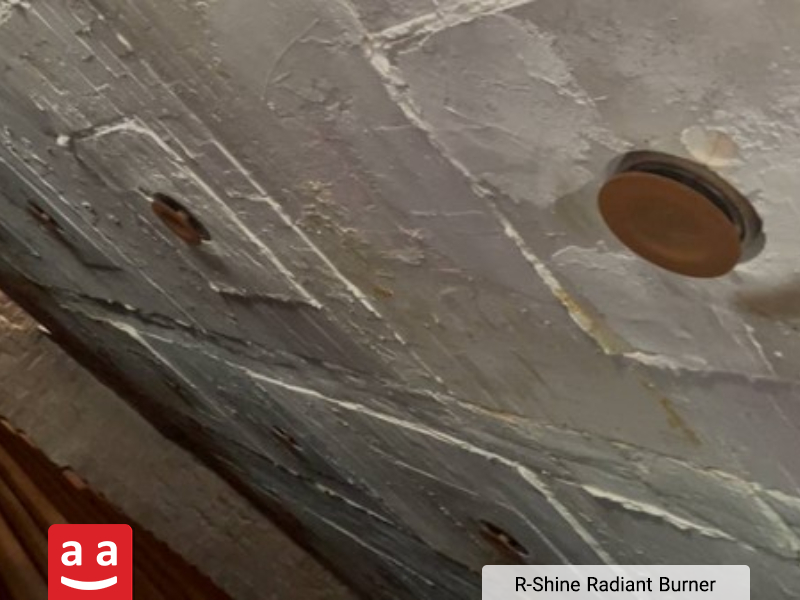
2- Arch Burners
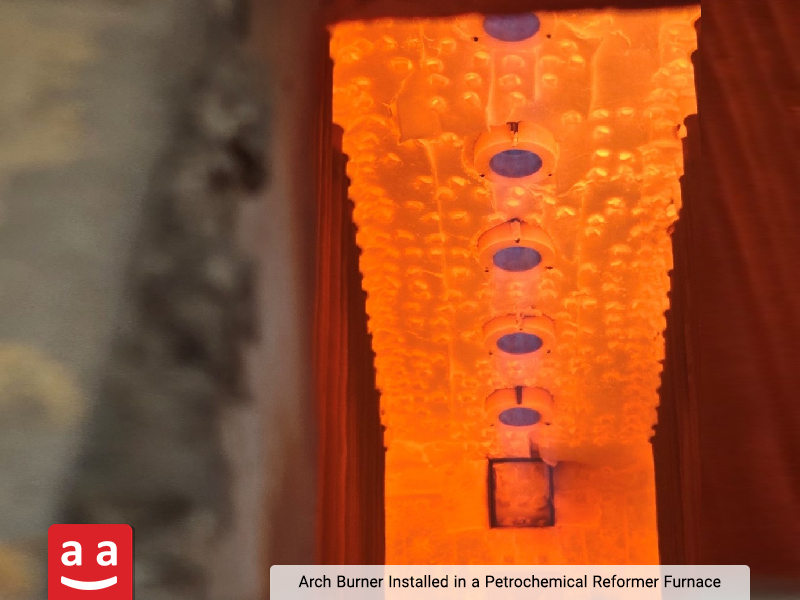
In this design, burners are mounted on the furnace roof, directing flames downward. This configuration ensures more uniform heat radiation along the full length of the catalyst tubes, enables more compact furnace geometries, and promotes improved circulation of hot gases around the tubes. Such burners are commonly employed in high-capacity vertical reformers or reforming units.
3- Bottom-Fired Burners
Although less common, these burners are used in certain designs, especially in confined spaces or specialized reforming units. In this method, the flame is directed upward from the furnace floor. Such burners typically require more precise control to prevent overheating of the lower sections of the tubes.
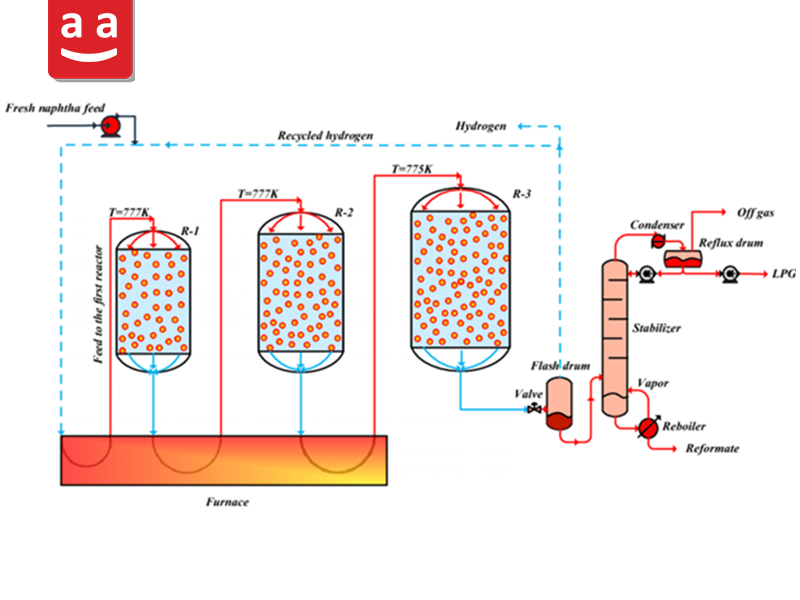
Catalytic Naphtha Reformer
Catalytic naphtha reformers are used in refineries to upgrade fuel octane ratings and generate aromatics like benzene, toluene, and xylene. The process operates at high temperatures (450–500°C) and moderate pressures across a series of reactors filled with platinum-based catalysts. The main reactions include dehydrogenation, isomerization, and cyclization, which are primarily endothermic and require carefully controlled external heating.
To provide the necessary thermal energy for these reactors, furnaces are used with burners capable of producing a uniform, gentle flame with precise heat distribution. Since the catalysts involved are highly sensitive and expensive, strict temperature control is essential. Additionally, flame stability, accurate control of the outlet gas temperature, and prevention of hot spots or thermal cracking are key requirements for burners used in this type of reforming units.
Autothermal Reformer (ATR)
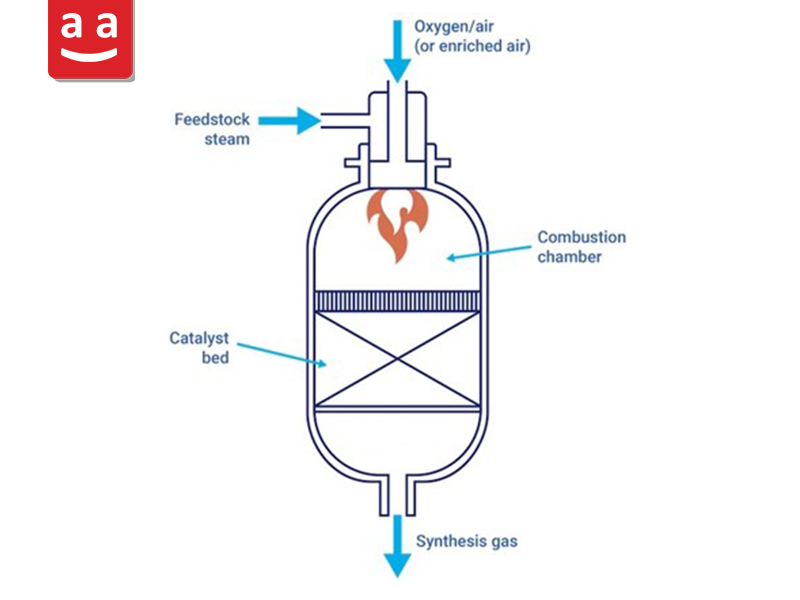
It is a relatively advanced technology used for producing synthesis gas in ammonia and methanol units. In this process, natural gas is injected into a reactor along with steam and pure oxygen, where combustion occurs in the initial section. The heat generated from this internal combustion drives the endothermic steam reforming reactions in the catalytic section of the reactor. Due to the combination of exothermic and endothermic reactions occurring within the same zone, the process is designed to maintain thermal neutrality.
In the design of this type of reforming unit, combustion takes place in a very confined space, requiring an intense, short, and stable flame under high pressure. Key challenges for the burners in ATR include precise spray nozzle selection, accurate fuel-to-oxygen ratio control, and high-temperature-resistant combustion equipment design. Burners used in this type of reformer must withstand harsh operating conditions, including high pressures and extremely high flame temperatures, while ensuring complete, soot-free combustion.
Partial Oxidation Reformer (POX)
Partial oxidation reformers are reforming units specifically designed to convert heavier feedstocks such as heavy naphtha, residual oil, or even coal into synthesis gas. In this process, hydrocarbons react with a limited amount of pure oxygen or enriched air. Unlike steam methane reforming (SMR), which is an endothermic reaction, the main reaction in partial oxidation (POX) is exothermic, obtaining the energy required to break molecular bonds from internal combustion. The primary product of this process is synthesis gas, consisting of hydrogen (H₂) and carbon monoxide (CO), which finds widespread use in chemical industries and synthetic fuel production.
Although POX obtains its required energy directly from the chemical reaction and does not require external heating, the burner at the reactor inlet remains crucial. It serves as the reaction initiator by supplying the initial combustion temperature needed to raise the fuel-oxidizer mixture to the optimal range, typically between 1200 and 1500 °C. Once ignited, the exothermic reaction sustains the high temperature within the reactor. Moreover, the burner plays a key role in ensuring thorough and uniform mixing of oxygen and hydrocarbons, preventing the formation of hot spots, soot, and coke.
The Role of Burners in the Performance of Reforming Units in Petrochemical
The burner is considered the thermal heart of many reforming units in petrochemical industries. Regardless of the dominant reaction type in each reforming units, whether endothermic like steam methane reforming or exothermic like POX, the precise control of thermal energy supply, temperature distribution, and uniform mixing of fuel and oxidizer all depend on the burner. Stable, efficient, and safe operation of reformers in reforming units relies heavily on proper burner design and its harmony with the thermodynamic and chemical characteristics of the process.
In steam methane reformers (SMR), burners directly heat the furnace walls to supply the necessary heat for the endothermic reactions in the catalytic section. In these reformers, burner arrangements are designed to maximize radiant heat transfer to the catalyst tubes while maintaining a uniform temperature distribution on their surfaces. The use of side-wall, roof-mounted (arch), or combined burners depends on the furnace’s thermal design.
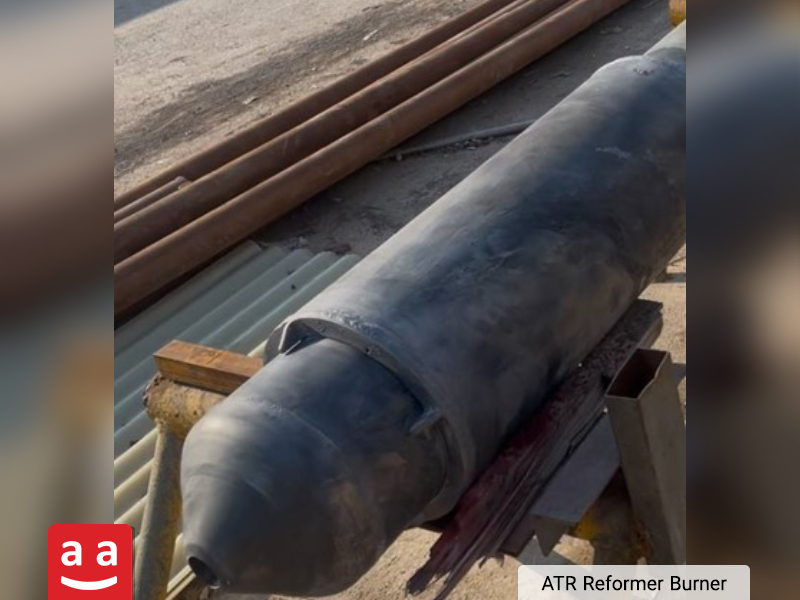
In contrast, in processes such as POX or ATR where the combustion reaction occurs inside the reactor, burners not only provide the initial ignition temperature but must also be designed to ensure complete and controlled mixing of fuel and oxidizer within fractions of a second under severe pressure and temperature conditions. Flame stability, corrosion resistance, soot prevention, and specialized nozzle design are essential requirements for these burners.
In naphtha reforming units, burners are primarily used in indirect heating systems, where their role is to provide uniform heat to heat exchanger coils or intermediate fluids (such as hot oil). Here, flame uniformity, prevention of localized overheating, and precise control of heat output are key burner requirements.
Overall, burner design must be fully compatible with the specific conditions of each reforming unit, including required temperature, operating pressure, feedstock type, heat transfer method, and environmental considerations. Alongside technical specifications, fuel efficiency, reduction of pollutants (such as NOx), and ease of maintenance are also major criteria in burner selection.
Optimal Use of Hydrogen-Rich Flare Gases with Advanced Burners by Raadman Industrial Group
In many petrochemical plants, especially methanol production units, flare gases with a high hydrogen content are commonly generated and typically burned off under normal conditions. Using advanced technical expertise and innovative burner designs, Raadman Industrial Group has made it possible to use these hydrogen-rich flare gases as part of the burner fuel mix. Instead of flaring, these gases are efficiently and safely combusted in raadman’s industrial burners, converting wasted gas into useful energy.
Raadman Burners are engineered to efficiently combust mixtures of natural gas and flare gas with varying hydrogen content. For example, the company’s arch burners can reliably and efficiently burn blends containing up to 70% hydrogen by volume with 30% natural gas. Similarly, Raadman’s radiant wall burners are designed to handle hydrogen concentrations up to 50% by volume in natural gas mixtures, maintaining high performance and combustion stability without efficiency loss or operational challenges.
This advanced capability significantly improves energy efficiency while playing a key role in reducing environmental emissions by utilizing gas resources that would otherwise be flared and wasted. Through the development of these innovative technologies, Raadman Industrial Group is helping to drive the petrochemical industry toward cleaner, more sustainable, and economically viable operations.