

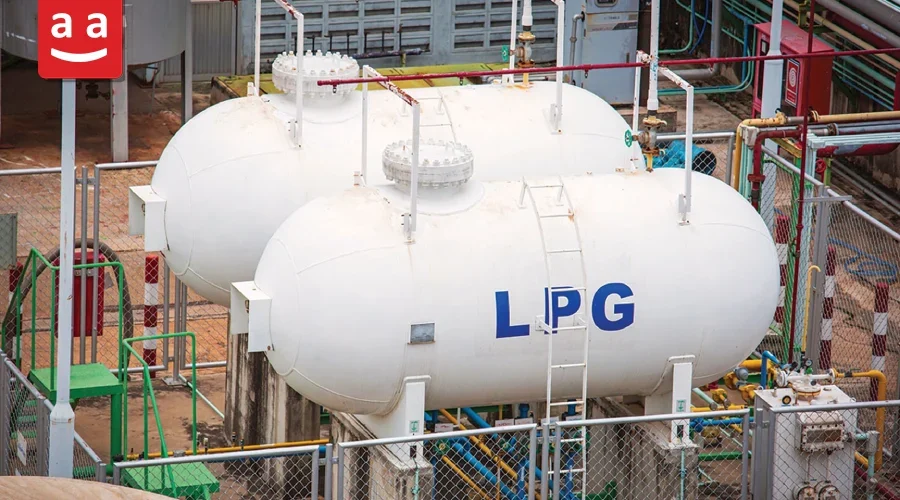
Liquefied Petroleum Gas (LPG) is among the most common fuels used in industrial operations. Thanks to its specific physical and chemical properties, LPG serves multiple purposes across different industries and is produced and distributed in various grades and supply models. In this article, we aim to give you a clear understanding of what LPG is, how it works, and the many ways it is used across different industries.
What is liquefied petroleum gas (LPG)?
Liquefied Petroleum Gas (LPG) is a mixture primarily composed of the hydrocarbon gases propane and butane, stored in liquid form to facilitate safe transportation and efficient storage. It may also contain small amounts of propylene and butylene.
As a petroleum by-product, LPG is separated as a light, volatile gas during refinery and natural gas processing operations. It is colorless, and before entering commercial markets, it is compressed, cooled, and liquefied. Most LPG comes from large oil and gas fields and is commonly used for heating, powering vehicles, making aerosol products, and even as a refrigerant in fridges and freezers.
Physical and Chemical Properties of LPG
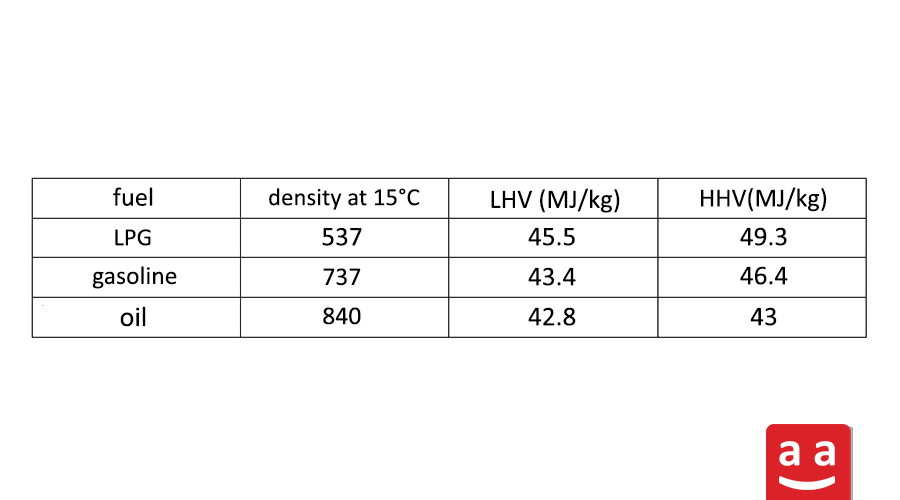
LPG is produced as a byproduct of natural gas and crude oil refining. It is a mixture of propane and methane, with a Wobbe Index ranging from 72-87 MJ/m3. This gas has a high calorific value (around 46 MJ/kg), which is higher than gasoline and fuel oil, meaning it produces more energy for the same weight. However, since LPG has a lower density, it produces less energy than gasoline when compared by volume.
At 15°C, one liter of liquefied petroleum gas (LPG) weighs between 500 and 560 grams. The gas is colorless, odorless, and tasteless when produced, but sulfur compounds are added to it to provide an odor for safety reasons. The internal pressure of LPG tanks reaches up to 8 bar when they are full.
Industrial Applications of LPG
- Fuel supply for burners and boilers, offering clean and efficient heat
- Residential and commercial uses such as heating, cooking, and hot-water systems
- Various manufacturing processes, especially those involving drying or thermal treatment
- LPG filling stations for vehicles
Comparison of LPG with other common fuels
The table below compares the characteristics of LPG with gasoline and oil.
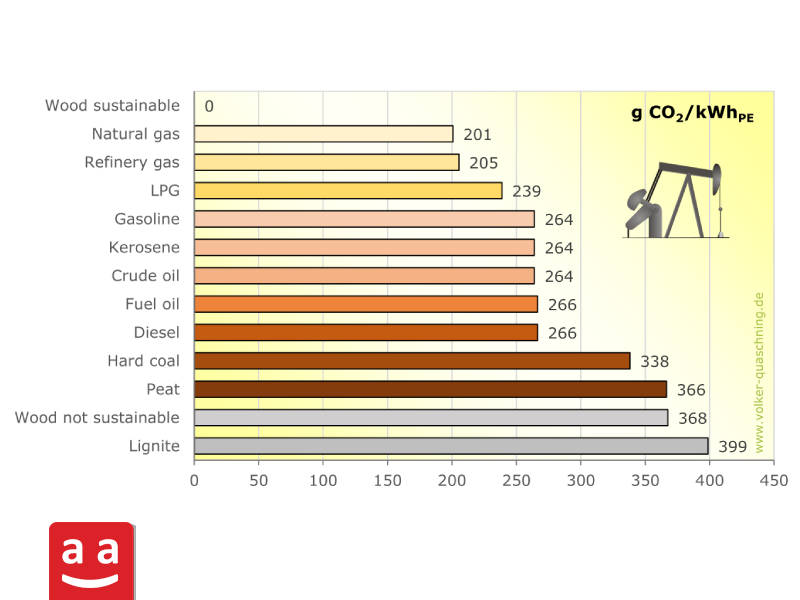
The combustion of liquefied petroleum gas (LPG) generates less carbon dioxide compared to liquid and solid fuels but emits more than natural gas. The diagram below illustrates the comparison of CO2 emissions per kilowatt-hour of energy generated from the combustion of different fuels. In general, the CO2 emissions per kilowatt-hour of energy generated from the combustion of liquefied petroleum gas (LPG) are approximately 90% of those produced by oil and 70% of those produced by coal. However, LPG emits more carbon dioxide compared to natural gas.
Main Components of LPG
LPG is composed of several light hydrocarbon gases, each with distinct physical and chemical characteristics. Combined, they deliver a reliable, clean, and energy-dense fuel source. The key components of LPG are:
1- Propane
Propane is a primary constituent of LPG. It is a gas at room temperature but can be liquefied under moderate pressure. Propane provides high heat output and excellent ignition performance. Because it vaporizes reliably even in cold conditions, LPG blends for colder regions typically contain a higher proportion of propane. It is commonly used for residential heating, vehicle fuel, and various industrial applications.
2- Butane
Butane is another major component of LPG and, together with propane, forms the standard commercial blend. It is colorless and odorless until safety odorants are added, and it liquefies easily. Butane delivers high energy output, but its vaporization decreases at low temperatures. LPG blends in warmer regions usually contain more butane. It is widely used in lighters, stoves, heaters, and as a feedstock in chemical industries.
3- Butene
Butene, also known as butylene, is a derivative of butane naturally formed during petroleum and gas refining. Besides its role in LPG, butene is used in the chemical industry to produce plastics, synthetic rubber, and other organic materials. Although present in smaller amounts compared to propane and butane, butene plays a significant role in enhancing combustion properties.
4- Propylene
Propylene is a hydrocarbon similar to propane but contains a double bond, which gives it high industrial value. In addition to improving LPG efficiency, propylene is used to manufacture polymers like polypropylene, one of the most widely used plastics globally. Even small amounts of propylene help increase fuel performance.
The exact composition of LPG varies depending on the production site, refinery processes, and regional climate. Regardless of the mix, the goal remains the same: a fuel with high energy content, reliable ignition, and minimal environmental impact.
LPG Storage Tank
An LPG tank is a durable metal vessel used for storing liquefied petroleum gases like propane and butane. These gases are kept under high pressure and relatively low temperature so they stay in liquid form, which reduces their volume and makes them easier to store and transport.
Liquefied Petroleum Gas Production Process
LPG is derived from oil and natural gas fields, and its production involves a series of stages that start with extraction and continue through refining and storage. In fact, LPG isn’t produced as an independent resource; it’s mostly created as a by-product during the refining of crude oil and the processing of natural gas.

Extraction from Gas and Oil Field: The first step in producing LPG begins at gas and oil fields, where a mixture of hydrocarbons is extracted from underground wells. This raw gas stream includes methane, ethane, propane, butane, and heavier fractions. During processing, methane is usually separated as natural gas, while the heavier components—mainly propane and butane—form the basis for producing LPG.
Separation in Gas Processing Units: After the gas is extracted, it’s sent to gas processing plants. There, using physical and chemical methods—such as low-temperature distillation—the different components of the gas stream are separated. At this stage, propane and butane are isolated from lighter gases like methane and ethane.
Refining and Purifying LPG: After separation, the extracted gases still contain impurities like water, sulfur compounds, carbon dioxide, and heavier materials. To clean it up, the gas stream passes through treatment and dehydration units. These steps remove unwanted materials and produce a cleaner, safer, and more reliable LPG fuel.
Liquefaction by Compression and Cooling: After purification, the gas mixture is cooled and compressed until it becomes liquid. This process shrinks their volume by nearly 250 times, making them much easier to store and transport. At this point, the final product—LPG—is formed and stored in special steel tanks.
Storage and Distribution: Finally, the produced LPG is stored in large tanks and then delivered to various locations using specialized tankers, home cylinders, or industrial pipelines. The propane-to-butane ratio in the LPG can be adjusted according to its intended use. In colder climates, for instance, higher propane content helps the gas vaporize more efficiently.

In short, LPG is produced through a careful, multi-step process that includes extraction, separation, purification, and liquefaction of hydrocarbon gases. With its high energy density, low environmental impact, and convenient storage, LPG is now recognized as one of the most versatile and widely used fuels globally.
Guidelines for using liquefied petroleum gas
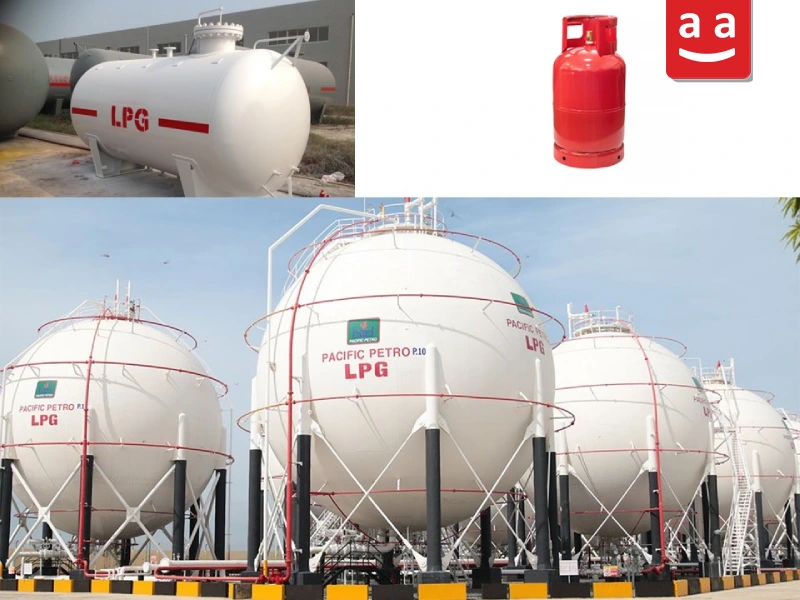
Using liquefied petroleum gas (LPG) in industrial burners requires special safety and technical precautions due to the unique properties of this fuel. LPG is usually stored and transported in spherical or cylindrical tanks. The reason for using these types of tanks is the high storage pressure of the fuel, which can be dangerous if leakage or lack of control occurs. Liquefied petroleum gas (LPG) is stored in these tanks under high pressure in a liquid form but is used and burned in a gaseous state within burners. The process of evaporating LPG and converting it from liquid to gas requires energy.
The evaporation rate of liquefied petroleum gas (LPG) must correspond to the fuel consumption rate of the burner. In storage tanks, LPG partially evaporates naturally, with the natural evaporation rate influenced by ambient temperature and the tank’s wetted area. For low-capacity systems, natural evaporation is typically adequate. However, in high-capacity industrial systems, natural evaporation alone is insufficient. To ensure a consistent and adequate flow and pressure of LPG, specialized equipment known as evaporators is employed. Additionally, evaporators help prevent problems such as freezing and frost buildup on the equipment.
Vaporizer
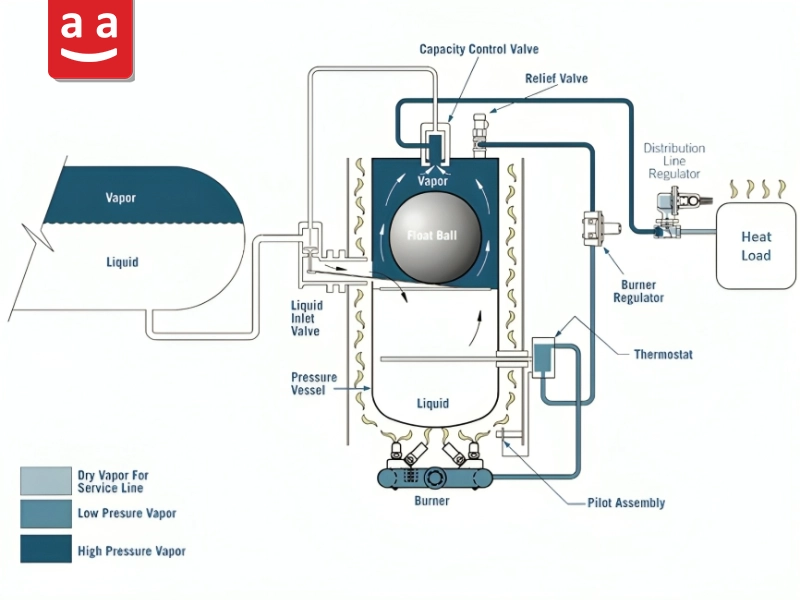
In the evaporator, incoming LPG absorbs heat and evaporates, preparing it for use in the burner. Evaporators maintain a steady and continuous gas flow, ensuring that liquefied petroleum gas (LPG) is delivered to the burner in a stable and optimal form, while also preventing equipment from freezing. The use of these devices stabilizes the combustion process and ensures the efficient operation of industrial burners. LPG evaporators are typically divided into three main categories:
Electric vaporizers: In this type of evaporator, an electric current flows through a heating element inside the tank, causing it to heat up. The generated heat then promotes the evaporation of liquefied petroleum gas (LPG).
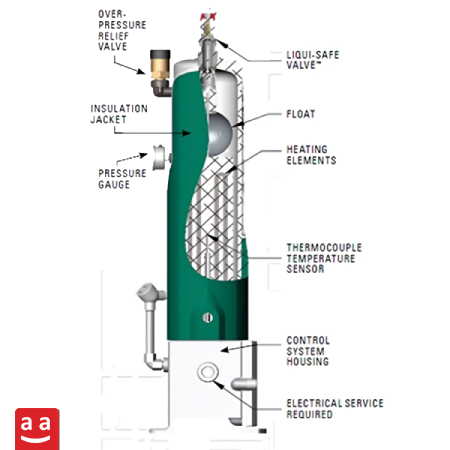
Direct fired vaporizers: In these evaporators, a small amount of LPG is burned, and the resulting heat is used to evaporate the necessary volume of liquefied petroleum gas (LPG). They are called “direct fired evaporators” because the flame directly heats the LPG, converting it into gas. This type of evaporator is commonly used in LPG combustion systems.
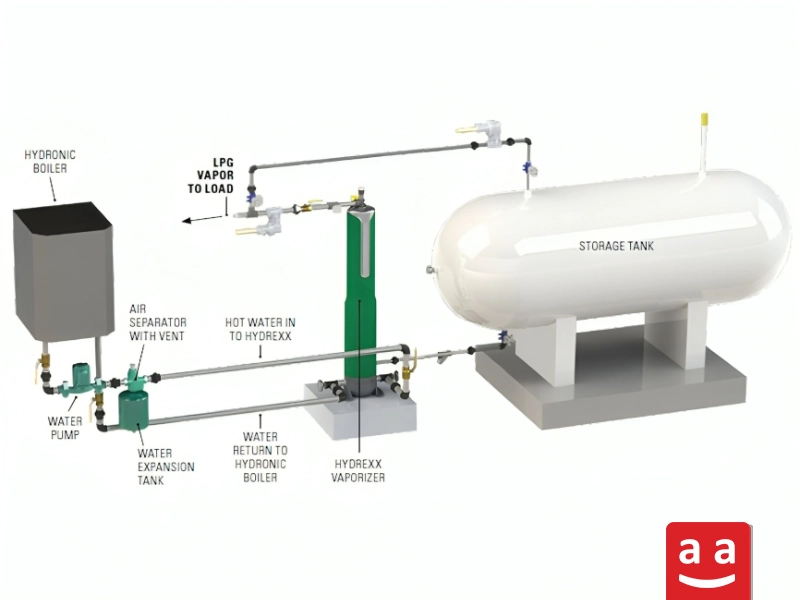
Vaporizers with steam or hot water as the heat source: In this method, a heat exchanger is used to transfer heat from steam or hot water to the liquefied gas. The liquefied gas enters on one side of the exchanger, and steam or hot water flows on the other side. The thermal energy from the steam or hot water vaporizes the liquefied gas.
Each of these three categories has specific applications based on the requirements and consumption capacity of liquefied petroleum gas.
Regulator
To install the LPG storage tank and vaporizers, two regulators are required. For more information about gas train regulators, see the article Gas Regulators.
Primary regulator: This regulator, also known as the high-pressure regulator, is responsible for reducing the gas pressure from the tank pressure (8 bar) to 1 bar. It should be installed after the vaporizer and close to it to ensure the gas pressure is reduced to the appropriate level after vaporization.
Secondary regulator: This regulator, known as the low-pressure regulator, reduces the gas pressure from 1 bar to the operating pressure of the burner. It must be installed near the burner so that the gas is delivered to the burner at the proper pressure.
LPG Pump
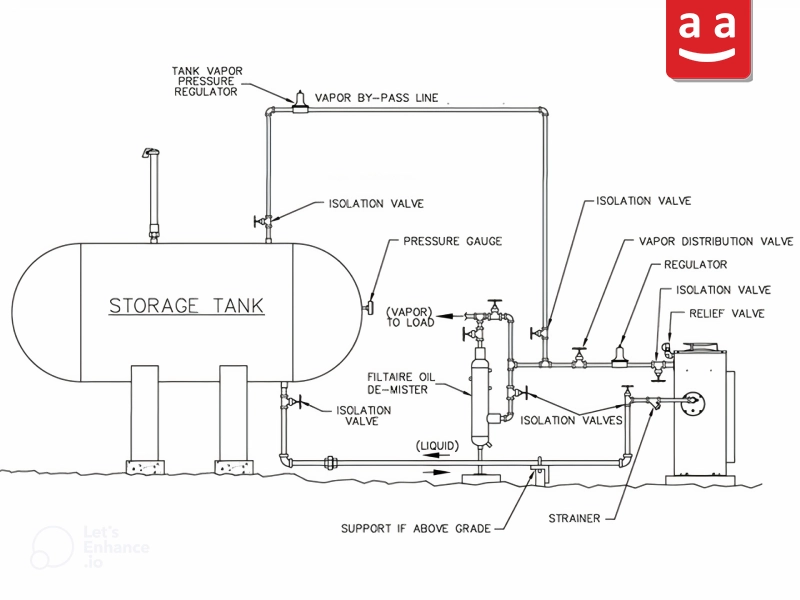
If the distance between the tank and the vaporizer is considerable, the use of a spark-proof electric pump is essential. This pump is installed to overcome pressure drop and ensure a continuous gas flow to the burner. The installation and setup of the tank, vaporizer, and other components of the LPG system are conducted in compliance with National Standard 841, which guarantees the safety and efficiency of liquefied petroleum gas systems.
Figure below shows the schematic of the piping between the vaporizer and the storage tank, which must be carefully designed and implemented to prevent leaks and excessive pressure drop, while effectively managing the gas flow.
Emission Standards for Liquid Fuel Combustion
The combustion of liquid fuels, especially in industries and power plants, produces pollutants that can harm human health and the environment. To reduce these impacts, emission standards have been introduced to control and limit the release of harmful substances.
For further familiarity with international standards related to burners, you can read the article “International Standards for Industrial Burners”.
Nitrogen Oxide (NOx) Emissions
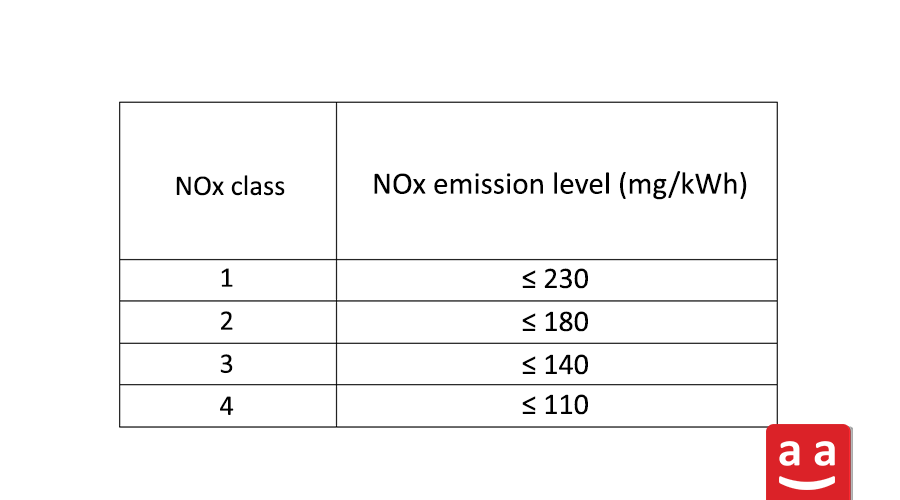
The adiabatic flame temperature of methane with 20% excess air is roughly 1800°C, while the adiabatic flame temperature of LPG under the same conditions is approximately 1850°C. Due to the higher flame temperature, liquefied petroleum gas (LPG) generates more nitrogen oxides (NOx) than natural gas. This pollutant can lead to air pollution, acid rain, and respiratory problems. According to European Standard EN-676, LPG-fired burners are categorized based on their NOx emission levels as shown in the table below.
Carbon Monoxide Emissions
According to EN 676, the CO emission level must not exceed 100 milligrams per kilowatt-hour.
Challenges and solutions in the combustion of LPG
LPG combustion in industrial burners with forced draft is a critical process for energy production and heating. LPG, a blend of propane and butane, has a high calorific value and generates fewer pollutants compared to liquid fuels like oil and heavy fuel oil.
Optimizing combustion conditions and utilizing equipment like evaporators are crucial for ensuring the safe and efficient operation of LPG-powered systems. Furthermore, compliance with standards such as National Standard 7595 and European Standard EN-676 plays a key role in controlling harmful pollutant emissions and safeguarding public health.
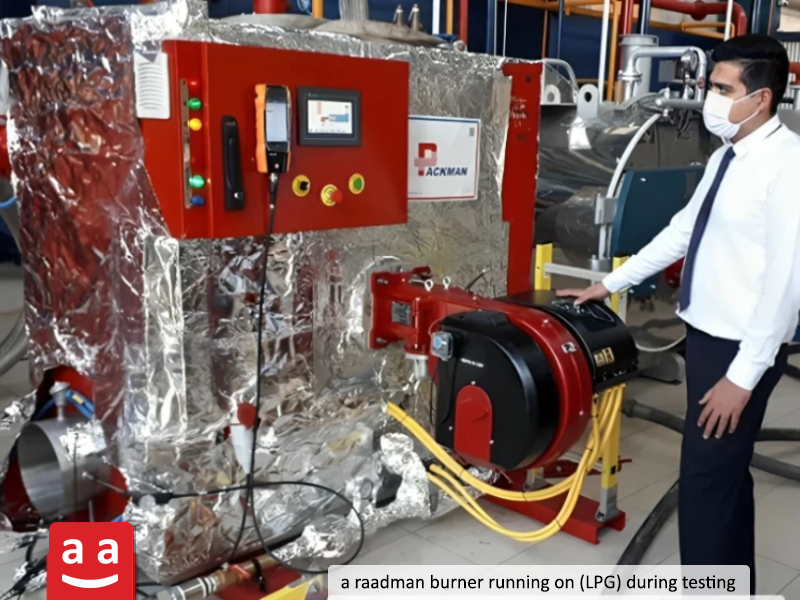
Raadman Industrial Group offers a variety of LPG burners in different capacities, available in NOx classes 2 and 3. In addition, Packman Company manufactures LPG-fired condensing boilers with capacities of up to 10 million kilocalories per hour, which are also available for purchase.
Recent Advances in LPG Combustion Technology for Industrial Burners
In recent years, LPG combustion technology in industrial burners has undergone significant changes. These advancements aim to improve energy efficiency, reduce emissions, and enhance the safety of combustion systems. The following section explores some of the most important recent developments in this field.
Minimizing Hazardous Pollutant Emissions
A key recent trend is the development of burners designed to significantly reduce the emission of NOx and CO pollutants. Moreover, the precise regulation of the air-to-fuel ratio, along with automated combustion process control, has enabled the optimization of burner performance.
Enhancing Thermal Efficiency through Smart Combustion Control Systems
Recent advancements in Smart Combustion Control systems have enabled real-time monitoring of combustion conditions. By employing sophisticated sensors to measure oxygen levels, temperature, and pressure within the burner, these systems can automatically adjust combustion parameters based on the data collected. This dynamic approach enhances efficiency, reduces fuel consumption, and optimizes the overall performance of the equipment.
Optimization of Evaporator Systems
One of the main challenges in using LPG is the need to vaporize it before combustion. The latest evaporators utilize low-energy electric systems and optimized heat exchangers, which help reduce energy loss and increase the speed of gas preparation for combustion.
Utilizing Digital Technologies for Monitoring and Maintenance
Today, many industrial burner manufacturers use smart control systems to optimize the performance of combustion systems. These technologies enable remote monitoring and the prediction of potential failures, resulting in reduced repair costs and extended equipment lifespan.
New Safety and Environmental Standards
With stricter environmental regulations, industrial burner manufacturers must continuously upgrade the technologies used in their products to meet the safety and environmental requirements defined in the relevant standards.
Liquefied petroleum gas: an efficient fuel for the industry
LPG is one of the best options for use in industrial burners due to its characteristics such as high calorific value, lower pollution, and ease of storage and transportation. This fuel not only generates significant energy but also causes less environmental harm compared to liquid fuels such as oil and heavy fuel oil. To use LPG optimally and safely in industrial burners, it is crucial to follow safety standards, use the right equipment such as vaporizers and regulators, and design the related systems carefully. These steps enhance performance, minimize risks, and control pollutant emissions.
Raadman Industrial Group provides suitable solutions for utilizing LPG through the production of advanced burners that comply with international standards. These products not only have high efficiency but also contribute to reducing air pollution and preserving the environment. Using LPG as a clean and effective fuel is a smart choice for industries aiming to improve productivity and sustainability.


6 responses
Hello,
I am curious about scaling up to use LPG for an hourly volume of up to 15 tons per hour for industrial burner.
Seems most applications are for lower throughput.
Much appreciated,
Hello
Using LPG requires roughly 80 kg/h per MW of thermal energy, meaning that 15 tons/h of LPG can deliver approximately 187 MW of heat output.
Raadman burners are engineered for heavy-duty industrial performance, operating on LPG from 800 kW up to 45 MW
What operational risks arise when LPG fuel temperature drops during continuous burner operation?
A drop in LPG temperature reduces vaporization efficiency, which can limit gas flow and lead to unstable combustion or burner shutdown. Proper system design and thermal control prevent these issues.
How does LPG fuel density variation affect burner calibration and combustion stability?
Changes in LPG composition and density alter the air–fuel ratio. Without proper burner calibration, this can result in inefficient combustion or increased emissions, making precise adjustment essential.