
NOx (Nitrogen Oxides) emissions have risen considerably over the last century, primarily due to industrial activities and the widespread use of fossil fuels for power generation, transportation, and industrial processes. These emissions have serious negative impacts on public health and the environment, contributing to respiratory illnesses, smog formation, acid rain, and the degradation of ecosystems. As a result, NOx reduction has become a critical priority for industrialized nations.

Various technologies have been developed to reduce NOx, focusing on both the prevention of its formation and its removal after combustion. The development of these methods relies on a thorough understanding of the chemical reactions involved in NOx formation. Key parameters influencing NOx generation include combustion temperature, oxygen concentration, and residence time in high-temperature zones. By controlling these parameters, NOx emissions can be effectively minimized.
| Formula | Name | Nitrogen Valence | Properties |
|---|---|---|---|
| N2O5 | Dinitrogen Pentoxide | 5 |
White Solid Very Soluble in Water Decomposes in water |
|
N2O4 NO2 |
Dinitrogen Tetroxide Nitrogen Dioxide |
4 |
Red-Brown Gas Very Soluble in Water Decomposes in Water |
| N2O3 | Dinitrogen Trioxide | 3 |
Black Solid Soluble in Water Decomposes in Water |
|
N2O2 NO |
Dinitrogen Dioxide Nitric Oxide |
2 |
Colorless Gas Slightly Soluble in Water |
| N2O | Nitrous Oxide | 1 |
Colorless Gas Soluble in Water |
Key Factors Influencing Nitrogen Oxides Formation
Nitrogen Oxides emissions occur predominantly through the following mechanisms:
Thermal NOx: Generated when nitrogen in the air reacts with oxygen at high temperatures, usually above 1300°C. This is the most common form of NOx in combustion systems.
Fuel NOx: Forms when nitrogen compounds present in fuels like coal, oil, or biomass are oxidized during combustion.
Prompt NOx: Produced through complex reactions between nitrogen and hydrocarbon radicals in fuel-rich combustion zones. This form is significant in systems where fuel-rich combustion occurs, such as in engines.
The Zeldovich mechanism describes the chemical reactions responsible for thermal NOx formation:
N + O → NO + N
N + O2 → NO + O
N + OH → NO + H
At lower combustion temperatures (below 760°C), NO formation is much less significant. However, reducing the combustion temperature, optimizing burner design, and implementing other mitigation strategies are essential for controlling NOx emissions.
NOx Reduction Strategies
NOx reduction strategies can generally be classified into two major categories: combustion modification techniques, which aim to prevent or minimize NOx formation before or during the combustion process, and post-combustion treatments, which are designed to remove or convert NOx after it has been generated.
1- Primary Methods for NOx Reduction
The techniques below focus on controlling conditions before and within the combustion process to limit NOx generation at its source:
Design of Low-NOx Burners
Low-NOx burners, with their special design, prevent the formation of extremely high-temperature spots, which are the primary source of thermal NOx production. These burners achieve a uniform and controlled combustion process by reducing flame temperature, staged combustion, optimizing fuel and air mixing, and creating swirling flows. Additionally, their compatibility with technologies such as flue gas recirculation (FGR) and pre-mixed combustion further reduces NOx emissions. Low-NOx burners not only reduce pollutant emissions by up to 90%, but also enhance combustion efficiency, optimizes fuel consumption, and reduce the formation of other pollutants like carbon monoxide.
To view the different models of Raadman Low-NOx burners and their specifications, visit the Low-NOx burners page on our website.

Flue Gas Recirculation (FGR) and NOx Reduction Efficiency
Combustion product recirculation from the stack is a process that returns Products of combustion to the flame formation zone. At first, it seems that the process will increase the NOx formation because of the direct relation of NOx Emission with temperature. However, since the temperature of the recirculated flue gas is significantly lower than the flame temperature, this process actually helps to reduce nitrogen oxides production. The NOx formation diagram according to flame temperature has been shown below.
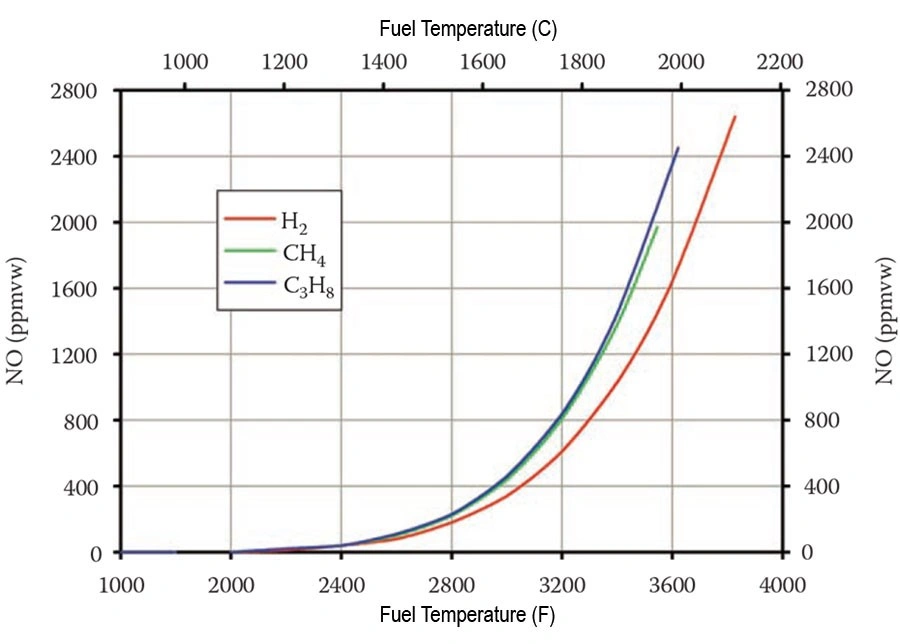
Optimizing the burner’s designed geometry in terms of aerodynamics is necessary to achieve a high fuel and air mixing rate. The goal is to prevent the formation of hot spots and create a homogeneous temperature in the flame so that while increasing the heat released at low flame temperature, the rate of NOx production will decrease. The standard methods of combustion products recirculation to the flame formation zone are furnace gas recirculation and flue gas recirculation (FGR) from the stack. In the FGR method, according to the Figure, the products of combustion products recirculate from the stack to the burner.
In this process, a fan or device that can circulate the combustion products inside the furnace or burner is needed. The burner must be designed to control the excess flow due to the return of combustion products and the increase in the temperature of the reactants in the combustion process due to the return of hot gases.
In the FGR method, an additional fan is needed to extract the combustion products from the stack to the burner. If the exhaust gas temperature is low enough, the burner fan can direct the combustion air and the flow of hot exhaust gases of the stack into the burner. This method is used in steam boiler burners where the exhaust gas temperature is generally much lower.
One of the disadvantages of the FGR method is the need to insulate the passageways of the flow of hot gases exiting the stack, which leads to an increase in the dimensions of the burner. The internal components of the burner must also be able to withstand the high temperature of the recirculated flue gas.
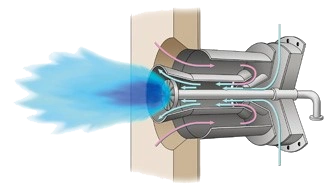
In the furnace gas recirculation method, a portion of the combustion products inside the furnace is redirected to the burner zone. The recirculated gases help stabilize and moderate the flame temperature, thereby improving combustion uniformity and reducing nitrogen oxides formation. This process is illustrated below.
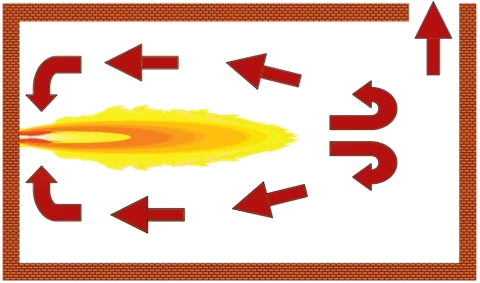
In the other approach (FGR), the combustion products from the furnace are recirculated through a passage integrated into the burner head. These gases mix with the incoming air, resulting in a lower flame temperature and reduced NOx formation.
Fuel Replacement
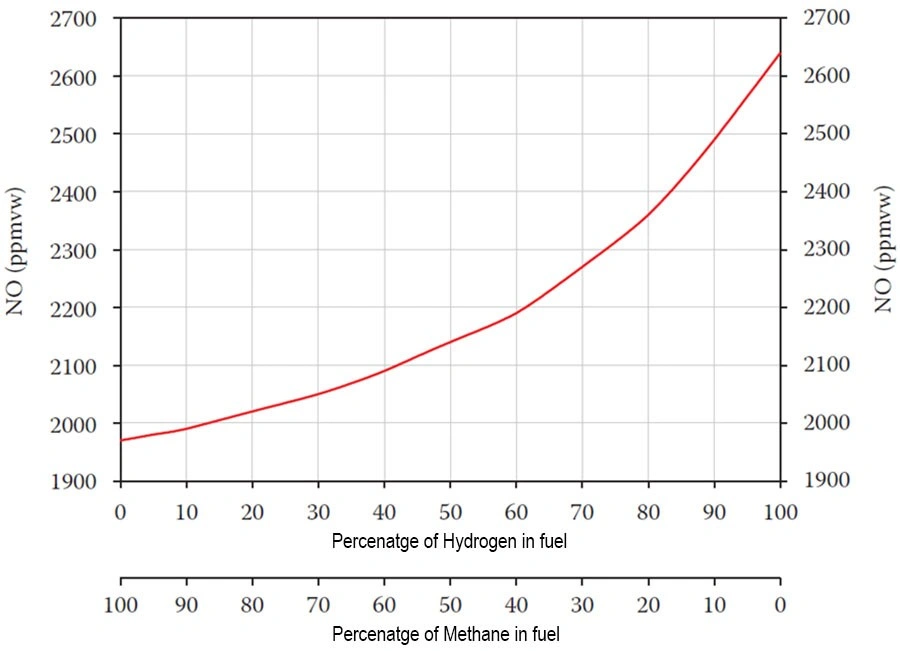
Replacing nitrogen-containing fuels with cleaner alternatives is one of the simplest methods for reducing NOx emissions. Fuels like coal and oil contain nitrogen compounds that directly contribute to fuel NOx. Natural gas (NG), on the other hand, contains little to no nitrogen, leading to much lower NOx emissions when burned.
For example, switching from heavy oil to natural gas in industrial burners or power plants can significantly reduce NOx emissions. In systems where complete fuel replacement isn’t feasible, blending fuels (such as natural gas with hydrogen or biogas) can also reduce emissions.
Oxidizer Replacement
Air is the most common oxidizer. Significant results in NOx reduction can be achieved using pure oxygen as a substitute for air. For example, in methane (CH4) combustion, if the air with 79% nitrogen on a volumetric scale is replaced with oxygen, NOx emission can be removed entirely from the process because there are no nitrogen molecules to produce NOx.
Usually, NOx reduction occurs by reducing the amount of Nitrogen in the process. However, using high pure oxygen instead of air has its problems, like high extraction cost, but with the reduction of inexpensive methods in the future to separate oxygen from the air, it’s possible to expand this method in industries.
Excess Air
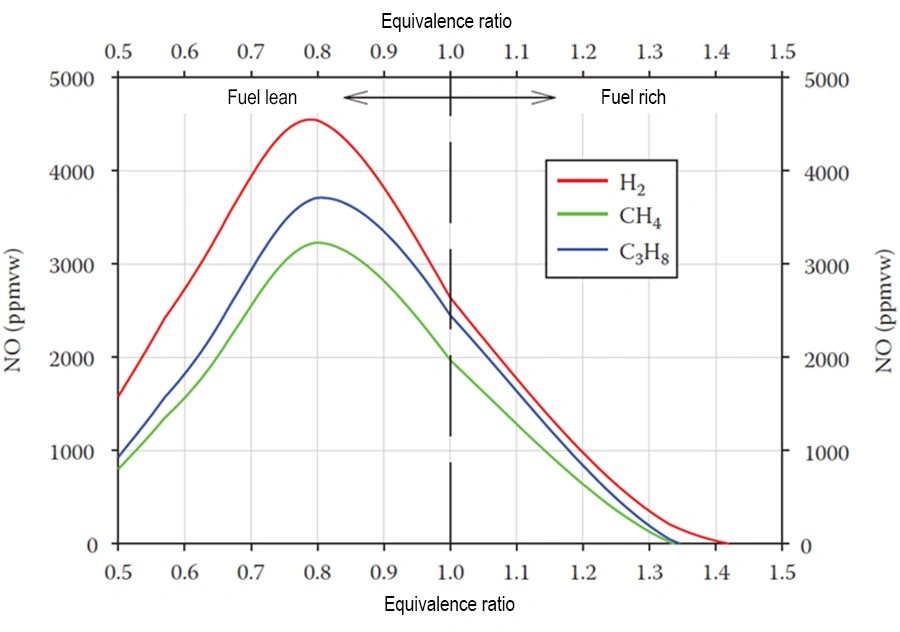
Increasing excess air before stoichiometric conditions (the fuel-rich zone) initially increases NOx emissions. However, further increases in excess air reduce NOx emission rates.
The first reason for the rise in NOx at low excess air levels is that the availability of oxygen promotes the oxidation of nitrogen to NO. The second reason is the high flame temperature near stoichiometric conditions, which enhances thermal NOx formation.
The combination of sufficient oxygen and high temperatures in the fuel-rich zone leads to higher NOx emissions. In contrast, higher excess air lowers both the flame temperature and oxygen concentration, reducing NOx formation.
Flameless Combustion
Flameless combustion is a novel technique for NOx reduction by achieving more uniform flame temperatures and eliminating the visible flame. In this method, combustion occurs in a distributed manner without localized high-temperature zones, significantly reducing thermal NOx formation.
Flameless combustion also reduces noise and thermal stress on equipment, making it an attractive option for industries where high thermal efficiency and low emissions are required.
Staged Combustion
Staged combustion is an effective method for NOx reduction in industrial burners. It can be carried out in two forms: air staging and fuel staging.
In the air staging method, air is supplied to the combustion chamber in two stages, while in the fuel staging method, fuel is injected in two stages. By staging either air or fuel, the combustion process is divided into primary and secondary combustion zones. In one zone, combustion occurs with a lean mixture (low fuel-to-air ratio), and in the other with a rich mixture (high fuel-to-air ratio). The lean zone experiences lower temperatures, and the rich zone has reduced oxygen concentration, both of which contribute to NOx reduction.
Additionally, the fuel staging method enhances the circulation of combustion products within the chamber. This improved circulation allows the products to mix with the incoming fuel and air flow, further reducing NOx emissions and improving overall combustion stability.


Premixed Combustion
In premixed combustion, fuel and air are thoroughly mixed before entering the combustion chamber, resulting in a uniform flame temperature and the prevention of high-temperature zones. This approach helps to suppress thermal NOx formation by minimizing the flame temperature and improving overall combustion efficiency. Moreover, accurate control of the fuel-to-air ratio ensures optimal combustion and reduces pollutants such as prompt NOx and carbon monoxide (CO).
Premixed combustion is commonly applied in advanced burners, gas turbines, and industrial boilers. When integrated with technologies such as air staging and flue gas recirculation (FGR), it further contributes to the reduction of NOx and other pollutants. Premixed burners are among the most effective technologies for NOx reduction, offering enhanced performance due to their stable and well-controlled combustion process.
For more details on these burners, you can refer to the article “Premixed Burners”.
Water or Steam Injection
One of the essential points in emission reduction is to prevent a decline in combustion efficiency while reducing NOx emissions. Water injection into the flame is one method of Nitrogen Oxides reduction. In this approach, the water absorbs part of the flame’s heat and carries some of the energy along with combustion products from the stack to the outside of the chamber. While effective in reducing NOx formation, this method can negatively affect combustion efficiency.
An alternative approach is the use of steam instead of liquid water. Steam offers several advantages because its temperature is much higher than that of liquid water and it already contains the latent heat of vaporization required to convert water into steam. Injecting liquid water imposes a large thermal load on the combustion process, as it absorbs a significant amount of energy before vaporization due to its high latent heat. Using steam can mitigate this issue while still contributing to NOx reduction.
The thermal efficiency in using water vapor is much more suitable than liquid water because it absorbs less energy than water, and as a result, it does not reduce thermal efficiency as much as liquid water. A nozzle is needed to spread the water evenly in the combustion gases if liquid water is used. No nozzle is needed if water vapor is used, and the steam easily mixes with the combustion gases, so mixing water vapor in combustion products is much easier. Another advantage of water injection is that the water flow rate is easily adjustable.
2- Secondary Methods for NOx Reduction (Post-Combustion)
The following methods are applied after the combustion process and aim to remove or convert NOx formed in the flue gases into less harmful compounds:
Selective Catalytic Reduction (SCR)
This method is used to remove nitrogen oxides from the exhaust gases. As stated at the beginning of this section, this technology is independent of industrial burners and requires additional equipment that is installed in the flue gas path. In the SCR process, a reducing agent such as ammonia (NH₃) or urea is injected into the flue gas stream.
In the presence of a catalyst, the reducing agent undergoes a chemical reaction, transforming NO into nitrogen (N₂) and water vapor (H₂O). This process generally takes place in the temperature range of 300 to 400°C and can eliminate 90-95% of the NO in the combustion products.
The catalysts used in this method are typically made from materials such as zeolites or metal oxides, including vanadium and tungsten, with their optimal performance reliant on maintaining the correct temperature and accurate ammonia injection.

Selective Non-Catalytic Reduction (SNCR)
In this technology, reducing agents such as ammonia (NH₃) or urea are employed to convert NO into nitrogen (N₂) and water vapor (H₂O). Similar to SCR, SNCR is a method for removing NOx from the combustion products and is independent of the burner. However, unlike SCR, SNCR does not require a catalyst, and the reducing agent is directly injected into the flue gas. this process typically occurs at higher temperatures (between 900 and 1100°C).
Compared to the SCR method, SNCR is simpler and more cost-effective in terms of complexity and expense. However, it has a lower efficiency, typically reducing NOx emissions by 40-70%. The selective non-catalytic reduction method works most effectively when the pollutant concentration is high, and the environmental temperature is favorable for the reduction reactions.

Towards Cleaner Combustion; Future Outlook for NOx Reduction Technologies
As global energy demands continue to rise, controlling Nitrogen Oxides (NOx) emissions remains a crucial challenge in achieving cleaner and more sustainable combustion. Over the years, various strategies have evolved to both prevent NOx formation and mitigate it after combustion.
Primary techniques such as combustion product recirculation, fuel substitution, excess air regulation, flameless combustion, staged combustion, premixed combustion, and water or steam injection have shown strong potential in minimizing NOx generation at its source. In addition, post-combustion control methods — including Selective Catalytic Reduction (SCR) and Selective Non-Catalytic Reduction (SNCR) — further improve overall emission control, contributing to cleaner and more efficient combustion systems.
Raadman Low-NOx burners employ advanced techniques such as staged and pre-mixed combustion, along with flue gas recirculation (FGR), to effectively reduce NOx formation while maintaining high thermal efficiency. These burners offer a reliable, cost-effective solution that supports environmental responsibility and promotes sustainable industrial growth.
Frequently Asked Questions About NOx Reduction Methods
1. What is NOx in combustion?
NOx refers to nitrogen oxides formed during fuel combustion. They are harmful pollutants that contribute to smog, acid rain, and health issues.
2. Why is reducing NOx important?
Reducing NOx is essential for cleaner air, regulatory compliance, and higher combustion efficiency. It also helps industries meet emission standards.
3. What are the main NOx reduction methods?
NOx reduction methods are divided into primary (in-furnace) and secondary (post-combustion) techniques. Primary methods prevent NOx formation, while secondary systems like SCR and SNCR remove it from flue gases.
4. What is the difference between SCR and SNCR?
SCR (Selective Catalytic Reduction) uses a catalyst and ammonia at 300–400°C for up to 95% efficiency.
SNCR (Selective Non-Catalytic Reduction) operates at 900–1100°C without a catalyst, achieving 40–70% efficiency.