


In industrial heating systems, water is typically used as the working fluid and the medium for heat transfer. However, at high temperatures, the use of this fluid requires extremely high operating pressures, which can be costly and challenging in terms of safety. Therefore, thermal oil boilers are used in applications that require high temperatures. Reaching high temperatures with thermal oil is possible at pressures close to atmospheric pressure, whereas achieving similar temperatures with water and steam requires much higher pressures. In many industrial heating processes, water serves as the primary heat transfer medium. However, when high operating temperatures are required, using water needs extremely high system pressures. This not only increases equipment costs but also introduces significant safety challenges. As a result, thermal oil boilers have become a reliable and efficient solution for industries that require high-temperature heat.
In these systems, thermal oil can reach high temperatures while operating at or near atmospheric pressure, eliminating the need for the high pressures required by water or steam systems. This allows for safer operation, simpler system design, and lower operating costs. In the following sections, we will explore the working principle, advantages, and industrial applications of this type of industrial boiler.
Thermal Oil Boiler
A thermal oil boiler is one of the types of industrial boilers classified as a water-tube boiler. In this type of boiler, thermal oil flows inside the tubes and transfers heat to the water surrounding the tubes within the boiler shell. Thermal oil boilers are among the most advanced boiler systems and are widely used in various industries to provide the required heat for industrial processes. Unlike steam or hot water boilers, which use water as the heat transfer medium, thermal oil boilers utilize thermal oil to transfer heat. These heat transfer oils can withstand high temperatures (typically up to around 300°C or even higher) without boiling, eliminating the need to increase system pressure to achieve high operating temperatures.

Advantages of Using Thermal Oil Boilers
Thermal oil boilers offer several advantages due to their unique operating characteristics, making them a suitable choice for a wide range of industrial applications. Some of the key advantages include:
- High-temperature operation: One of the main advantages of thermal oil boilers is their ability to heat thermal oil to temperatures close to 300°C or even higher without requiring high system pressure. In steam-based systems, achieving such high temperatures requires a significant increase in operating pressure, whereas thermal oil systems can reach these temperatures without the need for high-pressure operation.
- Enhanced safety: Since thermal oil boilers do not require high operating pressures, they are generally considered safer than water and steam boiler systems. The risk of pressure-related failures and explosions is significantly lower in these systems.
- No scaling and reduced corrosion: In steam boilers, scale deposits commonly form inside tubes and equipment, which can reduce efficiency, increase maintenance requirements, and lead to higher operating costs. However, thermal oil boilers require less frequent cleaning due to the use of thermal oil as the heat transfer medium.
- Longer system lifespan: Due to reduced corrosion and the absence of scale formation, thermal oil boilers typically have a longer service life compared to steam boilers or hot water boiler systems.
- Lower maintenance costs: Thermal oil boilers have lower maintenance and operating costs compared to other types of boilers, as thermal oil does not need frequent replacement, and there is no requirement for regular cleaning and repairs.
Disadvantages of Thermal Oil Boilers
While thermal oil boilers offer several advantages, they also have some disadvantages:
- High flammability: Thermal oil is flammable at high temperatures. If the pipes, fittings, or tanks of the system are damaged and the oil leaks out, it can come into contact with hot surfaces or flames, potentially causing a fire.
- Higher cost of thermal oil: The cost of acquiring thermal oil is higher compared to water and requires careful management.
- Environmental impacts: In case of leakage, thermal oil may damage the environment and demands proper safety precautions.
- Use of high-temperature pumps: For circulating thermal oil in a thermal oil boiler, specific pumps are necessary. These pumps must be capable of tolerating high temperatures, as thermal oil in these systems can reach up to 300 degrees Celsius or beyond.
Thermal Oil Boiler Components
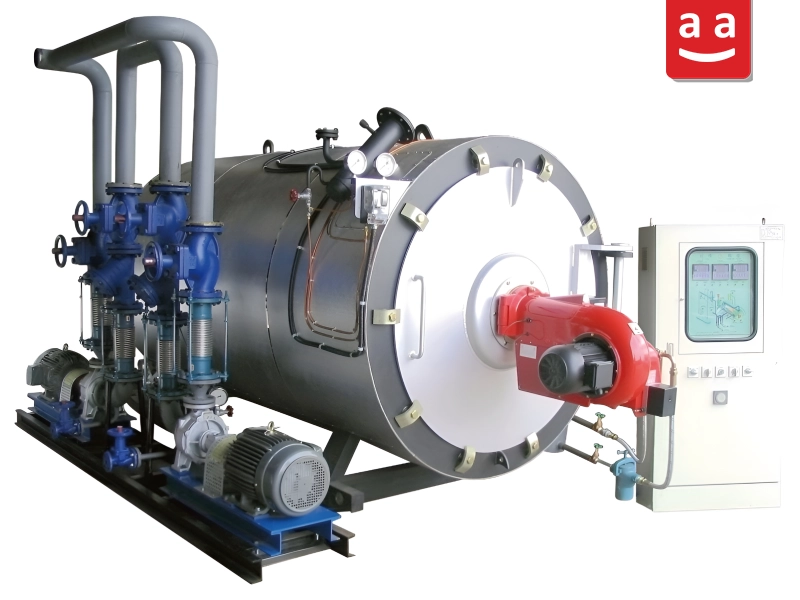
The main components of a thermal oil boiler include the furnace, heat coil, and burner, each of which is described in detail. Additionally, other essential parts such as the expansion tank, oil circulation pump, control valves, and more are also discussed, as they play a critical role in the boiler’s operation.
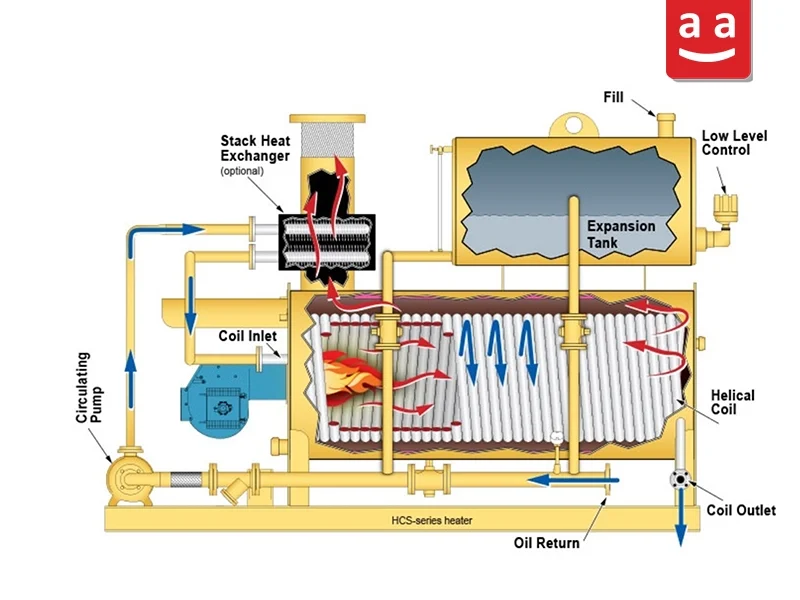
1- Furnace
This is the heart of the boiler, where the combustion process takes place. In the combustion chamber, fuels such as natural gas, diesel, or heavy oil are burned, releasing thermal energy. This thermal energy is then transferred to the heating coils, which carry the thermal oil.
2- Heating Coils
These are a network of tubes located inside the combustion chamber. The tubes are coiled around the flame to provide a larger surface area for contact with the hot gases produced by combustion. The thermal oil flows through these coils, absorbing the heat produced by the combustion. The number and arrangement of the coils vary depending on the boiler’s capacity and design.

3- Industrial Burner
One of the most critical aspects of designing and operating a thermal oil boiler is selecting an industrial burner with the appropriate capacity and combustion characteristics. A properly matched burner improves heat transfer efficiency and ensures stable, reliable system performance in industrial applications. In a thermal oil boiler, the burner generates the required thermal energy by combusting fuel (such as natural gas or diesel fuel) and transfers this heat to the thermal oil circulating through the heating coil.
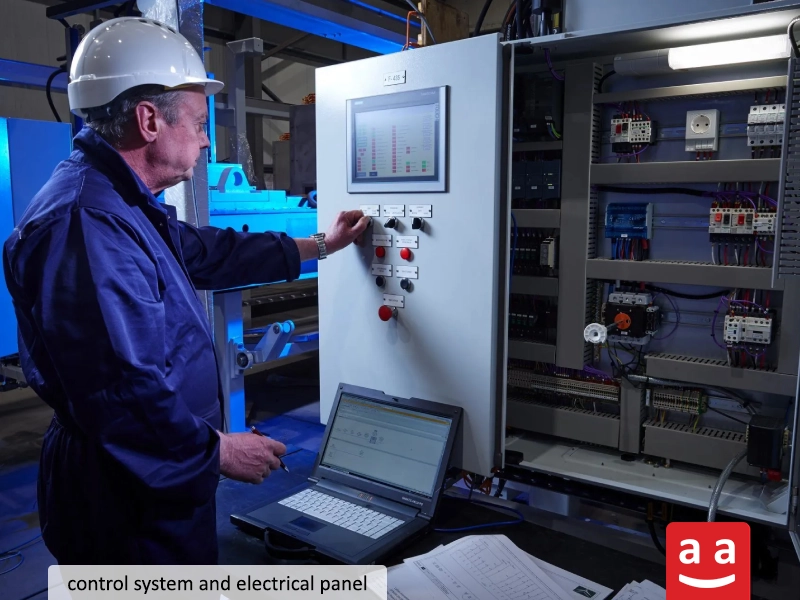
4- Control System
This system consists of electronic components and sensors which monitor the boiler operation. It measures the pressure, temperature, and oil flow rate, ensuring the boiler operates safely and optimally. Advanced control systems have the ability to adjust automatically and provide alerts.
5- Oil Pump
The oil pump is responsible for circulating the thermal oil throughout the system. It must be capable of directing the oil into the coils at the correct flow rate and pressure. Due to the high temperature of the oil, these pumps are built to endure and function properly at high temperatures.
6- Control Valves
These valves are used to regulate the pressure and flow rate of the oil in the system, controlling the oil’s inlet and outlet flow.
7- Expansion Tank
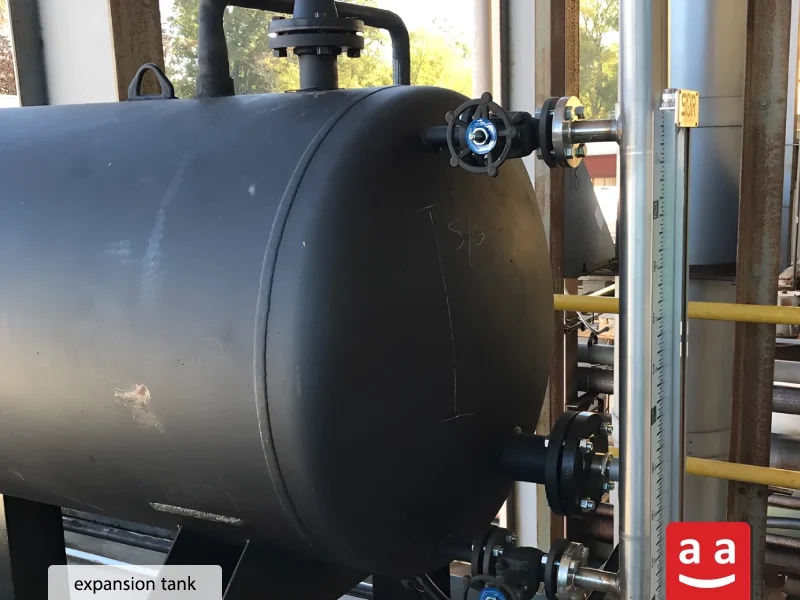
The expansion tank serves to compensate for the volume changes of the oil caused by thermal expansion. As the oil heats up, its volume increases, and if there isn’t enough space for this expansion, the pressure within the system rises significantly. The expansion tank allows the oil to expand without causing excessive pressure buildup. Typically, the expansion tank is located at a higher elevation than the boiler and other equipment, which creates a static pressure in the oil circuit, keeping the oil in its liquid phase and preventing it from vaporizing.
A key function of the expansion tank is to provide make-up oil. It serves as a storage for thermal oil, ensuring that when oil levels decrease due to leakage or evaporation, extra oil is injected into the system.
Since oil is highly flammable at high temperatures, one way to prevent explosions is inert the space above the tank. This is done through a process called blanketing, where an inert gas like nitrogen fills the upper space of the tank, preventing oxygen and air from entering.
Thermal Oil Used in Thermal Oil Boilers
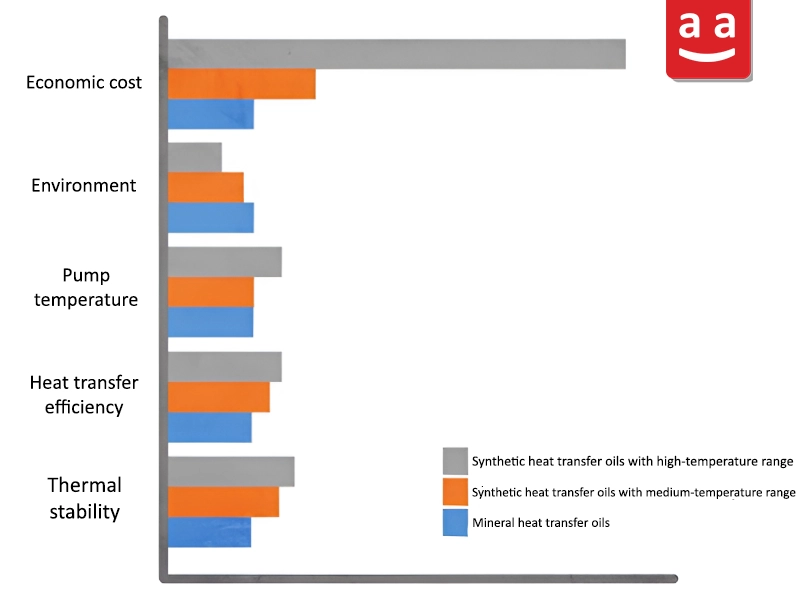
These oils must have a high heat capacity to transfer heat effectively. Thermal oils need to be stable at high temperatures and retain their properties. Resistance to oxidation is crucial to prevent the formation of deposits in the system. The oils should have a high boiling point to avoid vaporization at elevated temperatures. Additionally, they should not cause corrosion in the system components and must be environmentally safe.
Classifications of thermal oil
Thermal oils are divided into two main categories: mineral oils and synthetic oils. More details about them are explained below:
Mineral oils
The largest group of thermal oils consists of mineral oils. These oils are obtained through the distillation of crude oil in refineries. The operational temperature range for mineral oils is from -10°C to 300°C, which is why they are used for temperatures below 300°C. Mineral oils are more economical than synthetic oils and have less environmental impact. Paraffinic and naphthenic oils are examples of mineral oils.
Synthetic oils
These oils are produced through chemical synthesis processes. Synthetic oils, also referred to as aromatic oils, are based on a benzene structure. The operational temperature range for these oils is from -20°C to 400°C. Their aromatic structure makes them thermally more stable than mineral oils, which is why synthetic oils are used for temperatures higher than 300°C. Synthetic oils offer higher efficiency and greater heat transfer at elevated temperatures. Poly glycol fluids, ester and diester compounds, and silicone-based oils are types of synthetic oils.
Commonly used thermal oils include:
- Behran thermal oil (Behran Hararat 32)
- Shell thermal oil S2
- Total Seriola eta thermal oil 32
- Therminol thermal oil 66
Operation of a Thermal Oil Boiler
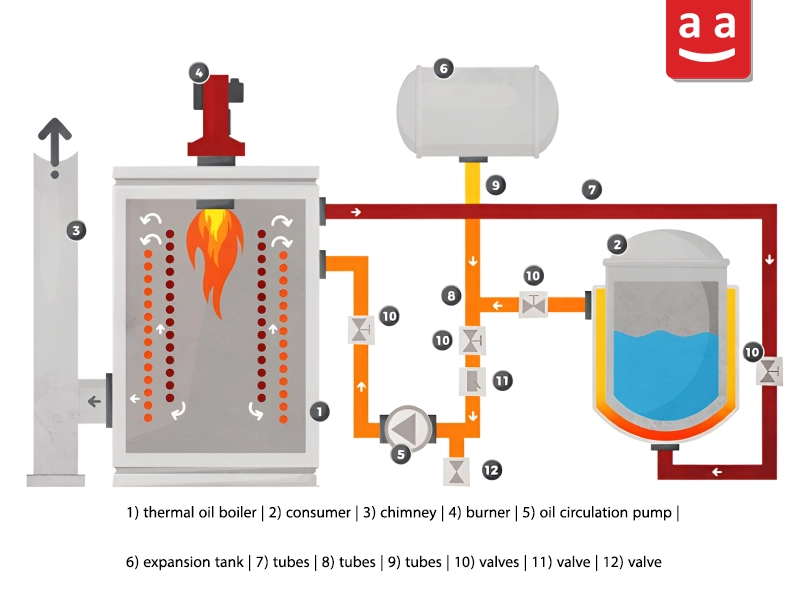
Thermal oil boiler functions by circulating thermal oil through a closed system. The heating process is carried out by a burner that uses either gas or liquid fuel. The process of heating the oil is carried out by a burner that uses either gaseous or liquid fuel. The burner ignites the fuel, generating thermal energy, which is transferred to the oil. The thermal oil then flows through a series of heating coils situated inside the boiler furnace. These coils are usually spiral-shaped to maximize contact with the hot gases produced during combustion.
In this way, the oil inside the coils is heated by absorbing heat from the hot gases. The thermal oil is then transferred through piping to heat exchangers or other industrial systems. After transferring its heat, the thermal oil cools down and the cooled oil returns to the boiler to be reheated. This cycle continues continuously, supplying the necessary heat for the processes without interruption.
Types of Thermal Oil Boilers
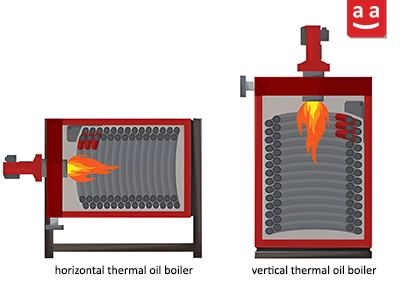
Thermal oil boilers are classified into two categories based on their installation method and overall structure: horizontal thermal oil boilers and vertical thermal oil boilers. They are also categorized according to the type of fuel used: gas-fired thermal oil boilers and electric thermal oil boilers.
Vertical Thermal Oil Boiler
These boilers are typically manufactured in lower capacities and are mainly used in applications where installation space is limited. Due to gravity, hot thermal oil drains more quickly from these boilers, making the draining process faster and more efficient.
Horizontal Thermal Oil Boiler
Horizontal thermal oil boilers are available in higher capacities than vertical models and generally offer greater thermal efficiency. They also provide easier access to various boiler components, making inspection, maintenance, and repair work more convenient.
Electric Thermal Oil Boiler
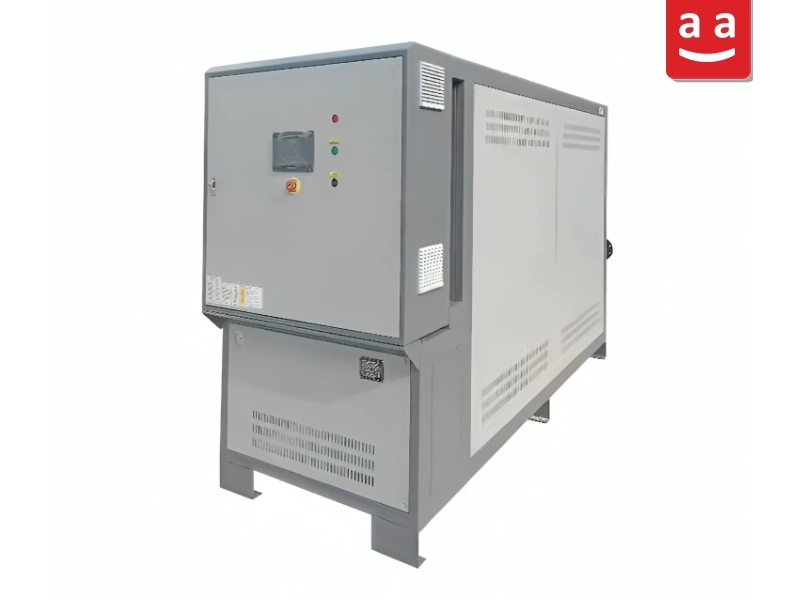
This type of thermal oil boiler uses electrical energy to heat the thermal oil instead of fossil fuels (such as gas or oil). In these boilers, heating elements generate the required heat to warm the oil. The heated oil is then transferred in a closed-loop system to different sections of the system to supply the necessary heat for processes. The non-use of fossil fuels in electric thermal oil boilers reduces environmental pollutants. Due to the high flammability of thermal oil at high temperatures, electric thermal oil boilers are recommended for lower capacities instead of gas-fired thermal oil boilers.
Applications of Thermal Oil Boilers
Thermal oil boilers are used in a wide range of industries. One of the most important applications of thermal oil boilers is in industries where heat transfer is done indirectly. This makes them highly effective for heating flammable materials like crude oil and natural gas. Some of the uses of thermal oil boilers are as follows:
1- Wood industry: Thermal oil boilers play a vital role in wood processing and the manufacture of wood products. They provide the controlled heat required for kiln drying, allowing moisture to evaporate gradually and uniformly. This controlled drying process improves the wood’s strength, dimensional stability, and long-term durability.
2- Textile industry: Thermal oil boilers serve as the primary heat source for textile drying and dyeing equipment used in fabric and fiber processing. By delivering precise and uniform temperatures, they enhance dye absorption, improve product quality, and accelerate the drying process.
3- Chemical industry: Thermal oil boilers are widely used in chemical manufacturing processes that require high and stable operating temperatures, including the production of solvents, adhesives, and resins. They are also extensively used in the production of bitumen, waterproofing membranes, and asphalt, as well as for heating heavy petroleum products during processing.
Thermal Oil Boilers; Efficiency, Safety, and Lower Costs
These boilers are considered as one of the most effective and efficient heating systems across different industries. By providing indirect heat, these boilers not only contribute to improving product quality but also play a crucial role in boosting productivity through energy savings and process optimization. From food and chemical industries to textiles and petrochemicals, thermal oil boilers are an ideal choice for meeting thermal needs due to their flexibility and high efficiency. raadman intelligent burners, using advanced controllers, play a significant role in optimizing fuel consumption and increasing the efficiency of thermal oil boilers.
FAQ About Thermal Oil Boiler
1- What is a thermal oil boiler?
A thermal oil boiler is an industrial heating system that uses thermal oil instead of water or steam as the heat transfer medium. It can deliver temperatures of up to 300°C or higher while operating at low pressure, making it a safe and efficient solution for high-temperature industrial processes.
2- What are the advantages of a thermal oil boiler over a steam boiler?
Thermal oil boilers operate at much lower pressures than steam boilers while achieving similar or higher temperatures. They offer improved safety, lower maintenance costs, reduced corrosion and scaling, longer equipment life, and higher energy efficiency for many industrial heating applications.
3- Which industries commonly use thermal oil boilers?
Thermal oil boilers are widely used in industries requiring reliable indirect heating, including wood processing, textile manufacturing, chemical production, petrochemicals, asphalt and bitumen production, and many other industrial processes that demand precise temperature control.
4- What are the main components of a thermal oil boiler?
A thermal oil boiler typically consists of a furnace, heating coils, an industrial burner, a control system, an oil circulation pump, control valves, and an expansion tank. These components work together to heat and circulate thermal oil safely and efficiently throughout the system.


5 responses
Have a lot of knowledge from reading and many thanks for your effort.
Thank you so much for your kind words. We’re really glad to hear that you found the article informative and helpful.
Thanks for sharing a very useful information about thermal oil boiler
In an oil heating system, what should operators check if the outlet temperature rises too quickly or the system frequently shuts down?
The first items to check are the oil circulation pump, flow rate, expansion tank, and temperature sensors. Insufficient circulation can cause local overheating in the heating coils and activate the safety shutdown. Operators should also inspect the burner flame, confirm that the control valves are working correctly, and check for any leakage or blockage in the piping. Regular monitoring of the oil level and operating temperature is essential for safe and stable performance.